

SiC modules do not absolutely require AlN substrates. However, for applications above 1200V that demand high switching frequencies, high power density, and long service life, AlN (aluminum nitride) substrates have become the most mainstream and mature packaging substrate solution for commercial SiC modules due to their high thermal conductivity, thermal expansion coefficient closely matched to SiC, and excellent high-frequency insulation performance.
As wide-bandgap semiconductors continue to gain widespread adoption, SiC (silicon carbide) power modules have become core components in high-voltage, high-frequency applications such as electric vehicles, photovoltaic energy storage systems, industrial drives, and high-end power supplies. Compared with traditional silicon-based IGBTs, SiC modules offer four key advantages: high-temperature tolerance, low power loss, high switching frequency, and high breakdown voltage, significantly improving the efficiency and power density of power electronic systems.
However, many engineers encounter a fundamental question: Why do high-performance SiC modules almost always use AlN substrates instead of traditional Al₂O₃ (alumina) substrates?
Many assume this is simply a material upgrade, but in reality, the operating characteristics of SiC devices impose strict underlying requirements on packaging substrates. Conventional alumina substrates cannot adequately support the high-frequency, high-temperature operating conditions of SiC devices. AlN substrates are currently among the best solutions for mass production, reliability, and thermal management of SiC modules.
This article analyzes the strong relationship between SiC devices and AlN substrates from four perspectives—thermal management, thermal expansion matching, electrical performance, and long-term reliability—while incorporating industry test data and addressing common material selection questions.
The Extremely Demanding Requirements SiC Modules Place on Substrates
Traditional silicon-based power devices typically operate at junction temperatures of ≤150°C, with relatively low switching frequencies and heat losses. As a result, their requirements for thermal conductivity and thermal shock resistance are modest, and low-cost alumina substrates are generally sufficient.
In contrast, SiC modules push performance boundaries much further, significantly raising the requirements for substrate materials:
- Ultra-high junction temperatures: SiC chips are typically rated for junction temperatures of 175–200°C, with even higher transient peak temperatures. Continuous high-temperature operation demands exceptional heat dissipation capability from the substrate.
- Ultra-high switching frequencies: Compared with silicon devices, SiC switching frequencies can be 5–20 times higher. High-frequency operation generates concentrated pulse heat, increasing the risk of localized hot spots.
- High power density: SiC modules are more compact and highly integrated, resulting in significantly higher heat flux density per unit area and greater thermal management challenges.
- Frequent thermal cycling: Electric vehicles and industrial equipment experience frequent start-stop cycles and load fluctuations. Substrates must withstand repeated mechanical stresses caused by temperature cycling.
In simple terms, the performance advantages of SiC modules depend heavily on the substrate’s ability to provide efficient heat transfer, structural stability, and electrical insulation. Any shortcomings in substrate performance can directly limit SiC device capabilities or even cause premature failure.
Performance Comparison of Common Ceramic Substrates for SiC Modules
| Property | Al₂O₃ (Alumina) | AlN (Aluminum Nitride) | Si₃N₄ (Silicon Nitride) |
|---|---|---|---|
| Thermal Conductivity (W/m·K) | 24 | 170–230 | 70–95 |
| Coefficient of Thermal Expansion (CTE, ppm/°C) | 7.0 | 4.5 | 3.2 |
| Dielectric Constant | 9.8 | 8.9 | 8.2 |
| Mechanical Strength | Medium | Medium | High |
| Cost | Low | Medium | High |
| SiC Compatibility | ★★ | ★★★★★ | ★★★★ |
Why Must SiC Modules Be Paired with AlN Substrates?
Core Reason 1: AlN Offers Outstanding Thermal Conductivity, Solving SiC’s Heat Dissipation Challenge
Thermal failure is the most common failure mode of SiC power modules. Since the substrate serves as the primary pathway for heat removal from the chip, its thermal conductivity directly determines the module’s cooling efficiency and operational stability.
A comparison of mainstream ceramic substrates clearly illustrates the advantages of AlN:
- Al₂O₃ (Alumina) substrate: Thermal conductivity is only 22–24 W/m·K. Its relatively poor heat conduction allows heat to accumulate, making it difficult to quickly dissipate the concentrated heat generated by high-frequency SiC operation. This can easily lead to excessive junction temperatures and accelerated device aging.
- AlN (Aluminum Nitride) substrate: Thermal conductivity reaches 170–230 W/m·K, approximately 7–8 times higher than alumina and approaching the thermal performance of pure copper. This enables rapid and uniform heat dissipation, significantly reducing the overall thermal resistance of the module.
Industry testing has demonstrated that replacing an alumina substrate with an AlN substrate can reduce junction temperature by 15–30°C under identical operating conditions. According to a widely accepted semiconductor reliability guideline, every 10°C reduction in junction temperature can approximately double device lifetime.
For industrial and automotive applications operating under continuous high-load conditions, the superior thermal conductivity of AlN is fundamental to ensuring the long-term stability and reliability of SiC modules.
Core Reason 2: Excellent CTE Matching Prevents Delamination and Cracking Failures
Beyond thermal conductivity, the coefficient of thermal expansion (CTE) match between the substrate and the SiC chip is a critical but often overlooked reason why AlN is preferred.
Power modules consist of a multilayer structure including the SiC chip, solder layer, ceramic substrate, and copper layers. During equipment startup, shutdown, and load transitions, significant temperature fluctuations occur. Differences in thermal expansion and contraction among these materials generate substantial mechanical stress at their interfaces.
If the CTE mismatch is severe, repeated thermal cycling can eventually cause:
- Solder joint cracking
- Copper layer delamination
- Substrate fracture
- Premature module failure
Comparison of Key Material CTE Values
- SiC chip: CTE ≈ 4.0 ppm/°C
- AlN substrate: CTE ≈ 4.5 ppm/°C (nearly a perfect match with SiC)
- Al₂O₃ substrate: CTE ≈ 7.0 ppm/°C (significant mismatch with SiC)
Due to this mismatch, alumina substrates are prone to interfacial delamination and peeling after only hundreds of thermal cycles under demanding SiC operating conditions.
In contrast, AlN expands and contracts almost synchronously with SiC chips, minimizing interfacial stress and greatly improving thermal cycling reliability and service life. This makes AlN particularly well suited for automotive and industrial applications requiring long-term stability.
Core Reason 3: Excellent High-Frequency Electrical Performance
One of the major advantages of SiC technology is its ability to operate at very high switching frequencies. Such operation places stringent demands on substrate insulation properties, dielectric characteristics, and electromagnetic compatibility.
AlN substrates are ideally suited to these requirements.
High Voltage Insulation Capability
AlN provides:
- High dielectric strength
- Stable dielectric constant (~8.9)
- Extremely low leakage current under high voltage
These characteristics allow AlN substrates to support operating voltages ranging from 600V to 1700V and beyond, making them suitable for:
- Photovoltaic inverters
- Energy storage systems
- Industrial drives
- High-voltage power conversion equipment
Low High-Frequency Loss
AlN exhibits very low dielectric loss at high frequencies. During SiC switching operation, it introduces minimal additional dielectric heating, avoiding the efficiency degradation commonly associated with conventional substrate materials.
Furthermore, multilayer AlN substrate structures can incorporate shielding layers that:
- Reduce electromagnetic interference (EMI)
- Minimize external filtering requirements
- Enable smaller and lighter system designs
These benefits align perfectly with the industry’s push toward higher power density and greater integration.
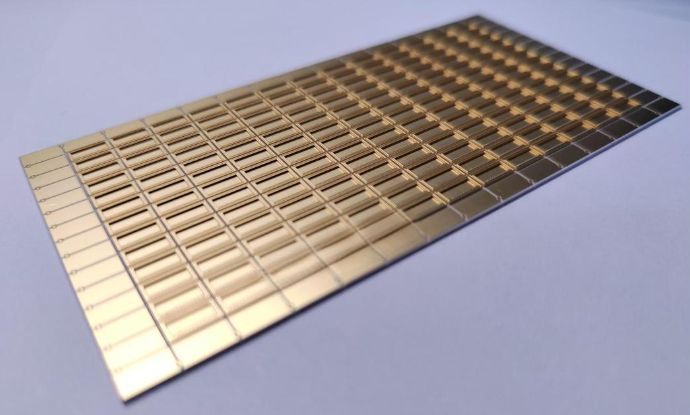
How Long Does an AlN Substrate Last?
AlN ceramic substrates are inorganic ceramic materials and do not experience significant aging in the way organic materials do.
From a material perspective, AlN substrates can theoretically last more than 20 years. In practical applications, failures typically arise not from the AlN ceramic itself but from:
- Solder fatigue
- Copper layer delamination
- Accumulated thermal cycling stress
- Packaging-related degradation mechanisms
For SiC power modules, lifespan is generally determined by:
- Power cycling capability
- Thermal cycling capability
AlN’s popularity in electric vehicles, photovoltaic inverters, and industrial drives stems largely from its excellent thermal stability and CTE compatibility with SiC.
Industry Reliability Data
Testing results show that:
- AlN DBC substrates typically withstand thousands to tens of thousands of thermal cycles between −40°C and 150°C.
- High-reliability AlN AMB substrates provide even greater cycling endurance and meet automotive-grade reliability requirements.
- In EV traction systems, SiC power modules using AlN substrates are commonly designed for 10–15 years or more of service life.
- In photovoltaic inverters and energy storage PCS systems, AlN substrates can support operational lifetimes exceeding 20 years.
Actual lifetime also depends on factors such as:
- Copper layer design
- Packaging technology
- Cooling system design
- Operating temperature
- Load fluctuation frequency
Effective thermal management can significantly extend the lifetime of the entire power module.
AlN vs. Other Substrates: Why Is There No True Alternative?
Many engineers ask why AlN dominates SiC module packaging when alternatives such as Al₂O₃ and Si₃N₄ are available.
Al₂O₃ (Alumina)
Advantages:
- Low cost
- Good insulation
Disadvantages:
- Poor thermal conductivity
- Significant CTE mismatch with SiC
- Relatively brittle
Suitable mainly for:
- Low-frequency
- Low-power
- Silicon-based power devices
Not suitable for medium- or high-performance SiC modules.
AlN (Aluminum Nitride)
Advantages:
- Excellent thermal conductivity
- Near-perfect CTE match with SiC
- Outstanding high-frequency electrical performance
- Strong overall cost-performance balance
Applications:
- Electric vehicles
- Solar inverters
- Energy storage systems
- Industrial automation
AlN has become the standard substrate for commercial SiC modules.
Si₃N₄ (Silicon Nitride)
Advantages:
- Superior mechanical strength
- Higher fracture toughness
- Better resistance to thermal shock
Disadvantages:
- Higher cost
- Lower thermal conductivity than AlN
Applications:
- Aerospace
- Heavy-duty commercial vehicles
- Extremely high-reliability systems
While silicon nitride excels in specialized applications, its cost and thermal limitations make large-scale adoption more challenging.
Therefore, for mainstream commercial applications, AlN offers the best balance among thermal performance, reliability, electrical properties, and cost.
Industry Validation: AlN + SiC Has Become the Standard Combination
Today, leading semiconductor manufacturers widely employ AlN substrates in their commercial SiC MOSFET and SiC power module products.
Examples include:
- Second-generation hydrogen fuel cell vehicle inverters
- Automotive SiC traction inverter modules
- High-power photovoltaic inverter modules
These products rely on AlN substrates to address:
- High-temperature heat dissipation
- High-frequency interference control
- Long-term reliability requirements
Industry experience consistently demonstrates that without AlN substrates, the advantages of SiC technology—high switching speed, high efficiency, and high reliability—cannot be fully realized.
Conclusion
Returning to the original question, the reason SiC modules are commonly paired with AlN substrates is not simply a matter of material upgrading, but rather a result of highly compatible material properties:
- Thermal conductivity 7–8 times greater than alumina, enabling efficient heat dissipation, lower junction temperatures, and longer device life.
- A thermal expansion coefficient closely matched to SiC, preventing delamination and cracking caused by thermal cycling.
- Excellent insulation, low dielectric loss, and EMI suppression characteristics, supporting high-frequency, high-voltage operation.
- The best overall balance of performance and cost, making it the most practical substrate solution for large-scale commercial SiC deployment.
As demand for higher efficiency and reliability continues to grow in electric vehicles, renewable energy systems, and industrial automation, the combination of AlN substrates and SiC power modules is expected to remain the dominant industry standard and a key enabling technology for next-generation power electronics.
Frequently Asked Questions (FAQ)
Q1: Can low-voltage SiC modules use substrates other than AlN?
A: Yes. Entry-level SiC modules operating at low voltage, low frequency, and low power can use alumina substrates. However, this generally comes at the expense of thermal performance and reliability, making it unsuitable for demanding commercial applications.
Q2: What are the disadvantages of AlN substrates?
A: Compared with alumina, AlN is more expensive. It also has somewhat lower bending strength and fracture toughness than silicon nitride. Nevertheless, it satisfies the requirements of more than 95% of commercial applications and offers superior overall value.
Q3: How should I choose between AlN DBC and AlN AMB substrates for SiC modules?
A: For standard industrial and photovoltaic applications, AlN DBC substrates typically offer the best cost-performance ratio. For automotive systems and other environments requiring high-frequency operation, severe thermal cycling, and extended service life, AlN AMB substrates generally provide higher reliability and are often preferred.