

The core lifeline of medical electronic devices—from portable blood glucose meters to large-scale CT scanners—is PCB assembly (PCBA). Its quality directly determines whether a device can pass global regulatory certifications and achieve “zero failure” in clinical environments. Data shows that the global medical PCB market is expected to reach USD 8.6 billion by 2025, with a compound annual growth rate (CAGR) of 7.2%. However, over 40% of medical device companies experience product launch delays or even recalls due to PCBA non-compliance or reliability defects.
This article provides a comprehensive analysis of medical PCB assembly from four key dimensions—industry pain points, core standards, process details, and practical solutions—to help enterprises rapidly overcome market entry barriers.
Why Standard PCBA Cannot Meet Medical Requirements
The unique nature of medical applications means that PCBA must overcome three critical “red lines,” which represent the fundamental differences from consumer and industrial electronics:
1. Compliance: Pressure from Multi-Authority Global Regulations
-
Multiple standards in parallel: PCBA must simultaneously comply with ISO 13485 (quality management system), FDA 21 CFR Part 820 (USA), MDR 2017/745 (EU), and NMPA Medical Device GMP (China). Failure to meet any one of these standards results in loss of market access.
-
Extreme traceability requirements: From component sourcing to final delivery, every step must be recorded and retained for at least two years after product discontinuation (FDA requirement). Certain implantable devices require lifetime traceability.
-
Strict material restrictions: Hazardous substances such as lead and mercury are prohibited (RoHS). Implantable devices must pass ISO 10993 biocompatibility testing, ensuring non-sensitization and non-cytotoxicity.
2. Reliability: “Zero-Tolerance” Requirements in Clinical Environments
-
Extreme environmental adaptability: Stable operation is required under conditions such as high-temperature steam sterilization at 134°C, vibration during ambulance transport, and low-temperature outdoor emergency scenarios down to –40°C.
-
Long service life assurance: Diagnostic equipment must operate continuously for 5–10 years without failure, while implantable devices often require a lifespan exceeding 15 years.
-
Strict electromagnetic compatibility (EMC): Compliance with IEC 60601-1-2 Class B is mandatory to prevent interference with other medical equipment (e.g., PCB radiation affecting patient monitors during surgery).
3. Process Complexity: Dual Challenges of Miniaturization and High Density
-
Component size limits: Placement of 01005 packages (0.4 mm × 0.2 mm) and soldering of 0.3 mm pitch BGA/QFN components, with placement accuracy requirements of ≤ ±5 μm.
-
High-layer, high-density designs: HDI boards with more than 16 layers, blind and buried vias, and embedded resistors/capacitors significantly increase the difficulty of signal crosstalk control.
-
Cleanliness requirements: Manufacturing environments must meet Class 10,000 cleanroom standards, with board ionic contamination levels of ≤ 1.56 μg/cm² (NaCl equivalent) to prevent bacterial growth or circuit corrosion.
Overview of Global Core Compliance Standards (2024 Updated Version)
| Standard | Applicable Region | Key 2024 Updates | Required Enterprise Actions |
|---|---|---|---|
| ISO 13485:2016 | Global | Enhanced risk management (FMEA must cover the entire supply chain) | Establish a QMS and obtain third-party certification |
| FDA 21 CFR Part 820 | United States | Added cybersecurity requirements (medical device data security) | Submit 510(k) filings; retain electronic records compliant with 21 CFR Part 11 |
| EU MDR 2017/745 | European Union | Classification upgrades (some diagnostic PCBs reclassified as Class IIb) | Complete CE certification and submit Technical Documentation (TD) |
| China NMPA | China | PCB suppliers must be included in medical device supply chain audits | Provide manufacturing licenses and material compliance documentation |
| IPC-6012 Class 3 | Global high-reliability devices | Added solder joint fatigue testing requirements | Ensure production complies with IPC-A-610 Class 3 |
Characteristics of Medical PCBs
1. High Reliability and Durability
Medical devices are often used in harsh environments, requiring PCBA assemblies to deliver extremely high stability and reliability.
Life-support and high-end medical products typically comply with IPC Class 3 standards, while non–life-support or mid- to low-end medical products generally comply with IPC Class 2 standards.
2. Precision Manufacturing Technologies
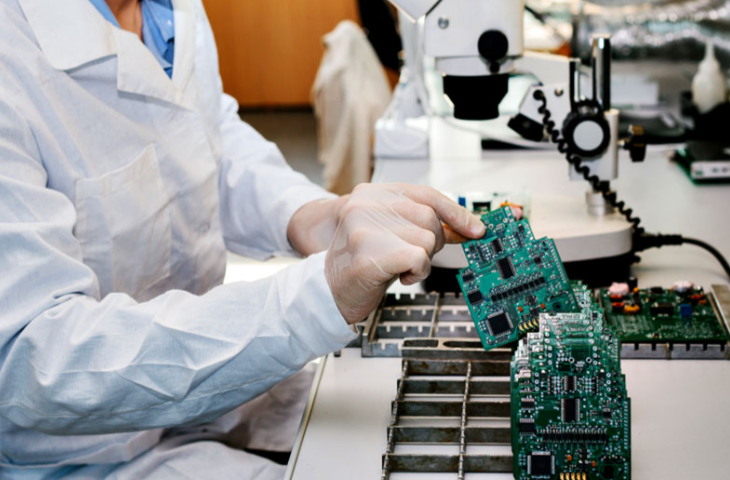
Medical PCBA manufacturing involves Surface Mount Technology (SMT), through-hole soldering, and micro-component assembly, ensuring accurate component placement and reliable solder joints.
3. Strict Quality Control
Due to the stringent requirements of the medical industry, PCBA manufacturers must be certified to the ISO 13485 Medical Device Quality Management System.
4. Complex Multilayer PCB Design
To meet the functional diversity and miniaturization requirements of medical devices, medical PCBAs commonly adopt multilayer PCB designs.
5. Low-Volume, High-Density Assembly
Medical devices are increasingly lightweight and portable, requiring PCBA processes capable of high-density assembly to minimize board size.
Core Processes and Quality Control in Medical PCB Assembly
1. Design Stage: Risk Prevention at the Source (DFM/DFA Optimization)
Component Selection
-
Priority is given to “medical-grade” components (e.g., TI medical operational amplifiers, ADI low-noise ADCs).
-
Supply chains must be multi-sourced to avoid disruptions caused by reliance on a single supplier.
Key PCB Design Considerations
-
High-Tg substrates (≥150°C) with low moisture absorption (≤0.2%) to enhance heat resistance and aging performance
-
Additional ground planes and guard ring designs to reduce EMC interference
-
Reserved test points to facilitate subsequent ICT and FCT testing
Simulation and Verification
-
HyperLynx is used to simulate high-speed signal transmission
-
ANSYS is applied for thermal simulation to prevent component failure caused by overheating
2. Production Process: Precision Manufacturing + Full-Process Inspection
| Production Stage | Key Process Requirements | Inspection Equipment / Standards |
|---|---|---|
| Solder Paste Printing | Solder paste thickness 30–50 μm, deviation ≤ ±10% | SPI (3D Solder Paste Inspection) |
| Component Placement | 01005 placement accuracy ±5 μm, BGA alignment ±15 μm | High-precision pick-and-place machines (FUJI NXT / Panasonic CM602) |
| Reflow Soldering | Peak temperature 235–245°C, soak time 60–90 s | Reflow oven with KIC thermal profiling |
| Inspection | Detection of opens, shorts, cold solder joints, and functional anomalies | AOI + X-Ray (BGA inspection) + ICT/FCT |
| Cleaning Process | No-clean or ultrasonic cleaning, ionic residue ≤ 1.56 μg/cm² | Ionic contamination tester |
3. Reliability Enhancement: Specialized Testing and Validation
Environmental Reliability Tests
-
Thermal cycling: –40°C to 85°C, 1,000 cycles with no solder joint cracking
-
Temperature & humidity bias: 85°C / 85% RH for 1,000 hours with no failure (simulating a 10-year service life)
-
Steam sterilization: 134°C, 2.0 bar, 100 cycles (for surgical instrument PCBs)
Electrical Reliability Tests
-
ESD protection: ±8 kV contact discharge, ±15 kV air discharge (IEC 61000-4-2)
-
Insulation resistance: ≥100 MΩ at 500 V DC
-
Signal integrity: High-speed signal eye diagrams compliant with USB 3.0 / PCIe 4.0 standards
Application Areas
-
Medical Equipment Manufacturing
Complex systems such as X-ray machines, CT scanners, ultrasound devices, and MRI systems all rely on PCBAs. -
Portable Medical Devices
Devices such as blood pressure monitors, glucose meters, and ECG machines require compact, low-power PCBAs. -
Health Monitoring and Telemedicine
PCBA manufacturing supports smart health monitoring devices that track vital signs and transmit data to healthcare professionals. -
Medical Robotics
Medical robots used in surgery, rehabilitation, and medication management depend on precise and reliable PCBAs. -
Drug Delivery Systems
Drug delivery systems require precise electronic control to ensure accurate dosage and timing.
Industry Standards Required for Medical PCB Assembly
Professional medical PCB assembly manufacturers are typically required to comply with the following international standards:
-
ISO 13485: Medical device quality management system
-
ISO 9001: Quality management system
-
IPC-A-610 Class III: High-reliability electronic assembly standard
-
IPC-2221 / IPC-6012: PCB design and performance standards
-
RoHS / REACH: Environmental compliance requirements
-
FDA regulations (where applicable)
These certifications are not only compliance requirements but also critical criteria for customers when selecting suppliers.
Key Factors in Selecting a Medical PCB Assembly Manufacturer
When choosing a medical PCB assembly partner, it is recommended to focus on:
-
Proven experience in the medical industry
-
ISO 13485 certification
-
SMT and precision soldering capabilities
-
Strict quality control and testing systems
-
Robust supply chain management
-
Strong technical support and engineering services
A reliable medical PCB assembly supplier can often provide valuable engineering input as early as the product design stage.
Conclusion
Medical PCB assembly is not simply about “soldering components,” but a comprehensive compliance and reliability challenge that spans the entire process—from design and manufacturing to delivery.
To succeed in the global medical electronics market, companies must partner with manufacturers that possess medical-specific certifications, precision manufacturing capabilities, and multi-market regulatory experience. Controlling quality at the source is the key to achieving rapid time-to-market and zero recalls.
If you are looking for medical PCB assembly solutions, or require customized compliance and process consulting, you are welcome to download our Medical PCB Assembly Compliance Handbook (including FDA / MDR / NMPA certification checklists), or contact our technical team directly for a free project evaluation.