
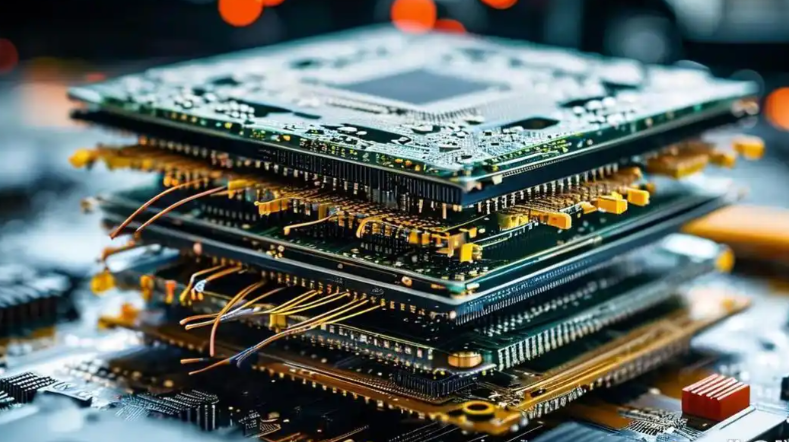
With the rapid development of 5G communications, smart wearables, autonomous driving, and high-end medical electronics, HDI PCBs (High-Density Interconnect Printed Circuit Boards) have become a core substrate for high-end electronic products. Compared with conventional multilayer PCBs, HDI boards offer finer line widths, smaller hole diameters, higher wiring density, and more stable performance, making them capable of meeting the design requirements of miniaturized, lightweight, high-frequency, and high-speed products.
However, HDI PCB manufacturers in the market vary significantly in capability and quality. A large number of small and medium-sized manufacturers can only produce standard 1+N+1 HDI structures and are unable to support high-precision processes such as 2+N+2, any-layer interconnect, and microvia buried/blind via structures. As a result, many purchasers and engineers frequently encounter problems such as substandard manufacturing processes, low yields in mass production, delivery delays, and inadequate after-sales support.
This article provides a comprehensive guide on how to choose a reliable HDI PCB manufacturer from key dimensions including core process capabilities, qualification and certification systems, production capacity and delivery capabilities, quality control processes, cost and quotation logic, after-sales technical support, and industry suitability. It covers all application scenarios, from prototyping and small-batch production to high-volume customized manufacturing, helping companies avoid potential pitfalls and accurately identify high-quality manufacturers that match their project requirements.
I. First Clarify Your Own Requirements: Precisely Match the HDI Board Selection Criteria
Before screening HDI PCB manufacturers, you should first clearly define the core requirements of your project. This helps avoid supply-demand mismatches caused by blind selection and is the prerequisite for efficiently choosing the right manufacturer. Different projects can have significant differences in HDI process levels, production thresholds, and manufacturer qualification requirements.
1. Define the HDI Structure Level
HDI boards are divided into multiple process levels within the industry, which directly determine the manufacturer’s production capability requirements:
- Entry-level: 1+N+1, 1st-order HDI: Suitable for standard consumer electronics, small household appliances, and general industrial control boards. The process difficulty is relatively low, and most PCB manufacturers can produce them.
- Advanced level: 2+N+2, 2nd-order HDI: Mainly used in smartphones, tablets, and smart wearable devices, with relatively high requirements for microvias and lamination accuracy.
- High-end level: 3rd-order and above, any-layer interconnect HDI: Suitable for 5G RF boards, autonomous driving automotive boards, high-end medical equipment, and precision industrial control boards. These involve high-precision manufacturing processes and can only be mass-produced by a limited number of professional HDI manufacturers.
2. Identify Core Process Parameter Requirements
Determine the key parameters of the PCB in advance and use them as mandatory criteria when screening manufacturers. These parameters include minimum line width and spacing, minimum microvia diameter, buried/blind via processes, impedance control requirements, number of layers, substrate materials, surface finish, temperature resistance rating, dimensional accuracy, and more.
For example, high-end precision equipment typically requires ultra-fine 2/2 mil line width and spacing, 0.075 mm microvias, and precise impedance control, which ordinary manufacturers may be completely unable to achieve.
3. Determine the Cooperation Scenario and Industry Requirements
Distinguish among three cooperation scenarios: R&D prototyping, small-batch trial production, and high-volume mass production, while also clearly defining the product’s application industry.
The industry certifications, quality standards, and reliability requirements for consumer electronics, automotive electronics, medical electronics, industrial control, and communications equipment can vary significantly. Automotive, medical, and industrial control applications generally have much higher requirements for HDI board stability, interference resistance, and service life than ordinary consumer electronics.
II. Core Manufacturing Strength: Evaluate the Manufacturer’s HDI Process and Production Capabilities
Process capability is the most important indicator when selecting an HDI PCB manufacturer and is also the key factor distinguishing ordinary PCB manufacturers from professional HDI manufacturers. Many manufacturers claim that they can produce HDI boards, but can only handle entry-level processes, while their yields for high-level precision processes are extremely low, making them highly susceptible to batch-quality problems.
1. Microvia and Buried/Blind Via Process Capabilities
The core advantages of HDI boards lie in microvias, buried/blind vias, and stacked-via processes. A high-quality manufacturer should have mature laser drilling capabilities and be able to accurately process very small hole diameters while avoiding problems such as hole misalignment, hole blockage, voids, and rough hole walls.
High-end HDI manufacturers should support stacked vias, staggered vias, and Via-in-Pad resin-filled via processes to ensure the stability of high-density routing. These capabilities are essential for high-end electronic products.
2. Ultra-Fine Circuit and Impedance Control Capabilities
High-precision HDI boards have extremely high requirements for circuit accuracy and impedance stability. A reliable manufacturer should be able to consistently achieve ultra-fine line widths and spacings of 2/2 mil or below and accurately control impedance tolerances to meet the requirements of high-frequency and high-speed signal transmission.
This helps effectively address issues such as signal attenuation, interference, and distortion, making the boards suitable for high-end applications such as 5G, RF, and high-speed computing equipment.
3. Lamination and Stack-Up Process Accuracy
Multistage HDI boards require multiple lamination processes. The manufacturer’s lamination process directly determines the flatness of the PCB, interlayer registration accuracy, and the defect rate of delamination and blistering.
High-quality manufacturers have standardized multilayer lamination processes and can strictly control interlayer shift and thickness deviations, ensuring stable mass production of multistage HDI boards and avoiding failures such as delamination, cracking, and short circuits during subsequent use.
4. High-End Material Compatibility
Professional HDI manufacturers can support various high-end PCB materials, including high-frequency and high-speed laminates, low-loss materials, high-TG high-temperature-resistant materials, aluminum substrates, ceramic substrates, and more.
They can select materials from well-known brands such as Rogers, Shengyi, and ITEQ according to the customer’s product requirements, thereby ensuring product quality starting from the raw material level.
III. Certifications and Qualifications: A Solid Guarantee of Quality and Compliance
Formal certifications and qualifications are the core credentials demonstrating an HDI PCB manufacturer’s quality control and compliant production capabilities, as well as the basic entry requirements for products to enter the corresponding industry markets. Boards manufactured by uncertified manufacturers not only lack quality assurance but may also fail to pass required approvals or be unable to be exported.
1. Basic General Certifications
- ISO 9001 Quality Management System Certification: A basic quality control certification demonstrating that the manufacturer has standardized production, inspection, and quality control processes.
- UL Safety Certification: An internationally recognized safety certification and a mandatory qualification for exporting PCB materials to the European and U.S. markets, ensuring product safety and compliance.
- RoHS Environmental Certification: Demonstrates compliance with international environmental standards and meets the environmental requirements for electronic products worldwide.
2. Industry-Specific Certifications (Verify as Needed)
- IATF 16949 Automotive Electronics Certification: If the products are used in automotive or autonomous driving applications, the manufacturer should have this certification to meet the high reliability and high stability requirements of automotive-grade products.
- ISO 13485 Medical Certification: An essential qualification for medical electronics HDI boards, ensuring high precision, high safety, and high durability.
- IPC Class Certification: The manufacturer should have IPC Class 2/3 production capabilities. Class 3 is the highest level and is suitable for high-reliability applications such as military, aerospace, and precision industrial control.
3. Batch Traceability and Testing Qualifications
High-quality HDI manufacturers have a complete batch traceability system. Every batch of boards can be traced back to the raw materials, production processes, and inspection data. They also have independent laboratories capable of carrying out a full range of reliability tests, including impedance testing, thermal shock testing, temperature resistance testing, insulation performance testing, and X-ray microvia inspection.
They should be able to provide complete test reports and quality certificates to meet customer factory audits and shipment inspection requirements.
IV. Production Capacity and Delivery: Ensuring Project Schedules Are Not Delayed
During cooperation, many companies encounter problems such as “the process meets requirements but delivery is delayed,” “insufficient capacity for large-volume orders,” and “urgent orders cannot be handled.” Therefore, the manufacturer’s production scale, delivery capabilities, and flexible production capabilities are key factors in the selection process.
1. Production Equipment and Workshop Capabilities
High-end HDI board production relies on high-precision automated equipment. High-quality manufacturers are equipped with complete sets of precision equipment, including fully automated laser drilling machines, high-precision exposure machines, automated lamination equipment, AOI optical inspection systems, and X-ray inspection equipment.
They also have clean, temperature-controlled production workshops, which can effectively reduce manufacturing errors and defect rates while ensuring that the production environment meets the requirements for precision PCB manufacturing.
Small manufacturers may have outdated equipment and lack cleanrooms, making them highly susceptible to problems such as board surface oxidation, dust contamination, and accuracy deviations.
2. Prototyping and Mass Production Delivery Capabilities
- R&D Prototyping: High-quality manufacturers support rapid prototyping. Conventional HDI boards can generally be delivered within 2–4 days, while high-order multilayer HDI boards can be expedited according to requirements, matching the pace of R&D iterations without delaying project schedules.
- Mass Production: Verify the manufacturer’s daily and monthly production capacity and confirm that it can handle your large-volume orders. This helps avoid situations where orders are outsourced to third-party manufacturers after being accepted, resulting in insufficient capacity, delivery delays, and loss of quality control.
3. Supply Chain and Flexible Production Capabilities
Reliable HDI manufacturers have stable raw material supply chains. PCB materials, inks, and copper foils are sourced from reputable brands to prevent the use of inferior raw materials.
At the same time, they have flexible production capabilities and can adapt to small-batch, multi-product orders as well as large-volume standardized orders. They can also support customized process adjustments to meet the individual requirements of different customers.
4. Delivery Performance Reference
You can ask the manufacturer to verify its delivery performance over the past year, its ability to handle urgent orders, and its compensation mechanism for delays.
Reputable companies establish comprehensive delivery control systems and clearly define compensation standards for delays, providing maximum protection for the customer’s project schedule.
V. Quality Control: Preventing Batch Defects at the Source
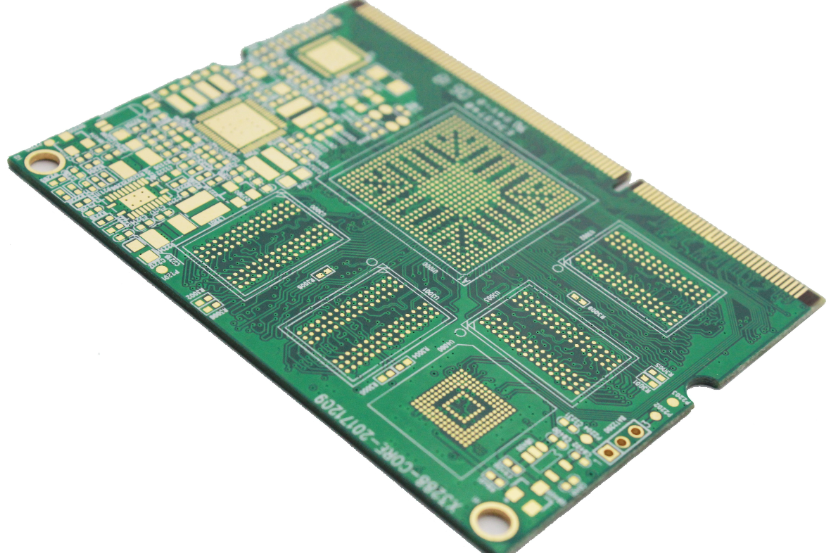
HDI PCBs are high-precision electronic substrates, and even minor defects can cause failures in the finished electronic product. Therefore, comprehensive quality control throughout the entire manufacturing process is essential.
The quality control system of a high-quality manufacturer should cover the entire process, from incoming raw material inspection, production and processing, and semi-finished product inspection to finished product inspection and final pre-shipment inspection.
1. Incoming Raw Material Inspection
All raw materials, including PCB materials, copper foil, ink, and solder mask, must undergo strict inspection before being put into storage. Their brands, specifications, and performance must be verified to prevent inferior, expired, or non-conforming raw materials from entering production, thereby controlling quality at the source.
2. In-Process Inspection
Dedicated quality control personnel should be assigned to each production process to conduct real-time inspections of critical processes such as drilling, circuitry, lamination, etching, and surface finishing.
Problems such as hole misalignment, circuit short circuits, and lamination blistering can be identified and corrected in a timely manner, preventing defective products from entering the next production process.
3. Comprehensive Finished Product Inspection
A complete set of inspections should be performed before finished products are shipped, including AOI optical appearance inspection, X-ray internal microvia inspection, continuity testing, impedance testing, temperature and voltage resistance testing, salt spray testing, and more.
This ensures that every board has an intact appearance, stable electrical performance, and meets reliability requirements, while maintaining a stable batch yield at a high industry level.
4. Defective Product Handling Mechanism
Reputable manufacturers have comprehensive mechanisms for defective product analysis, rework, and compensation. For manufacturing defects and process-related issues, they can implement corrective actions quickly while simultaneously optimizing the production process to prevent similar problems from recurring, thereby ensuring stable quality throughout long-term cooperation.
VI. Quotation and Cost: Tips for Avoiding Pitfalls and Achieving Cost-Effectiveness
There is no unified standard for HDI PCB pricing. It is affected by multiple factors, including process difficulty, substrate material, order quantity, delivery time, surface finish, and more. When selecting a manufacturer, avoid pursuing the lowest price blindly. Low prices are often accompanied by process compromises, inferior materials, low yields, and other issues, which may instead increase the overall cost.
1. Understand the Quotation Breakdown to Avoid Hidden Costs
Quotations from reputable manufacturers should be transparent and clear, with detailed costs including substrate material costs, process costs (buried/blind vias, stacked vias, impedance control), engineering fees, expedited production fees, shipping costs, taxes, and other charges. There should be no hidden fees or temporary price increases.
Small manufacturers often use low prices to secure orders and then make profits through additional process charges, expedited-order surcharges, and after-sales deductions.
2. Distinguish Between “Low-Cost and Low-Quality” and “Reasonable Cost-Effectiveness”
High-order HDI boards have high process requirements and require significant investment in equipment, so their reasonable costs are much higher than those of conventional PCBs.
If a manufacturer’s quotation is significantly lower than the industry average, there is a high probability that issues may exist, such as the use of recycled PCB materials, simplified process flows, reduced inspection procedures, or outsourced manufacturing. These issues can easily lead to batch defects and after-sales disputes later.
3. Prioritize Long-Term Cooperation Costs
For long-term mass production projects, priority should be given to manufacturers with reasonable quotations, stable quality, and controllable delivery times.
Stable quality can significantly reduce the costs of rework, returns and replacements, and after-sales maintenance, making it more cost-effective than choosing a manufacturer based solely on a low price for a single order.
At the same time, customers can negotiate volume-based tiered pricing to reduce long-term procurement costs.
VII. Technical Support and After-Sales Service: Ensuring Long-Term and Stable Cooperation
High-quality technical support and after-sales service are important guarantees for HDI board customization projects, especially for R&D-oriented companies and new product iteration scenarios. Many customers’ design drawings contain process blind spots, making it necessary for professional engineers from the manufacturer to provide technical support and optimization.
1. Early-Stage Engineering Support
A reliable HDI manufacturer should have a professional engineering team capable of providing DFM process review services. Before production, engineers should review the customer’s drawings and provide optimization solutions for unreasonable routing, processes that cannot be implemented, and areas that are prone to defects.
This helps eliminate production risks in advance, improve mass production yield, and shorten the R&D cycle.
2. Full-Process Technical Support
From drawing confirmation, process customization, and production processing to shipment and delivery, a dedicated contact person should be assigned to the customer to provide real-time production progress updates and respond promptly to requests for process adjustments and parameter modifications, ensuring efficient and smooth communication.
3. Comprehensive After-Sales Support
Reputable manufacturers should support unconditional returns and replacements for quality issues, free rework, and compensation for losses. They should also provide timely after-sales responses and quickly handle problems such as PCB defects, performance abnormalities, and delivery issues.
At the same time, they should provide long-term technical consulting services to support customers with subsequent product iterations and upgrades.
VIII. 8 Key Evaluation Dimensions for Selecting an HDI PCB Manufacturer
Equipment capabilities: Determine whether the manufacturer is equipped with genuine laser drilling equipment rather than using mechanical drilling as a substitute, as well as LDI (Laser Direct Imaging) equipment and automatic optical alignment systems. These are hard indicators for determining the upper limit of a manufacturer’s process capabilities.
Substrate supply chain: HDI boards have relatively high requirements for the CAF (Conductive Anodic Filament) resistance of substrate materials. This is particularly important in high-density and fine-pitch applications, where material selection directly affects long-term electrical reliability. Priority should be given to manufacturers that use materials from mainstream major suppliers, such as high-Tg materials from the Shengyi S1000 series.
Quality control and inspection system: Determine whether the manufacturer has a complete quality control process before shipment, including AOI (Automated Optical Inspection), microsection analysis, X-ray inspection, and other inspection procedures, particularly its capability to conduct sampling inspections of copper thickness on hole walls and interlayer alignment accuracy.
Prototyping yield and mass production consistency: Some manufacturers may achieve good yields during prototyping but experience a significant decline in yield during mass production due to insufficient production-line stability. When selecting a manufacturer, proactively ask for historical yield data from the mass production stage rather than only comparing prototype quotations and delivery times.
Industry cases and experience: Determine whether the manufacturer has mass production experience with similar products, particularly in industries with stringent reliability requirements such as communications, automotive electronics, and medical equipment. Such experience is more valuable as a reference than general claims that the manufacturer can “produce everything.”
Delivery time and capacity assurance: High-order HDI boards naturally have longer production cycles than conventional boards. It is necessary to evaluate whether the manufacturer’s production scheduling and capacity are stable to avoid repeated delivery delays caused by production capacity constraints.
DFM support capabilities: High-quality manufacturers generally have proactive DFM (Design for Manufacturability) review capabilities and can identify design issues that do not comply with their production-line process capabilities before an order is placed, rather than waiting until problems occur during prototyping before providing feedback.
Certifications and qualifications: If the products are intended for highly regulated industries such as automotive electronics and medical devices, it is also necessary to verify whether the manufacturer has the corresponding industry certifications, such as IATF 16949 for automotive applications and ISO 13485 for medical devices. These are industry entry requirements rather than merely issues of process capability.
Match the Manufacturer’s Capability Level According to the HDI Order
The “order” of an HDI board refers to the number of lamination cycles involved in the blind and buried via structure. The higher the order, the greater the process difficulty and the higher the requirements for the manufacturer’s capabilities.
| HDI Order | Structural Characteristics | Manufacturer Capability Requirements | Typical Applications |
|---|---|---|---|
| 1st-order | Single lamination cycle, with blind vias only on the outer layer | Most manufacturers with basic HDI production capabilities can meet the requirements | Mobile phone accessories, conventional consumer electronics |
| 2nd-order | Two lamination cycles, potentially including stacked vias | Requires genuine laser drilling and via filling/plating processes, with certain requirements for lamination alignment | Mid-to-high-end consumer electronics, communications equipment |
| 3rd-order and above | Multiple lamination cycles, generally using stacked-via structures | Requires LDI + automatic optical alignment systems; this is a high-end process, and only a limited number of manufacturers can achieve stable mass production | High-end smartphones, automotive electronics, medical equipment, aerospace |
The first step in selecting a manufacturer is to clearly determine the HDI order required by your product and then match it with a manufacturer at the corresponding capability level.
Using the production costs of a high-end production line designed for 3rd-order HDI to manufacture a 1st-order HDI product is wasteful, while having a manufacturer that specializes only in 1st-order HDI take on a 3rd-order HDI order can result in severe yield problems.
How to Choose the Right HDI Manufacturer Based on Project Requirements
Consumer electronics and conventional 1st-order HDI products: These applications are relatively cost-sensitive. Among manufacturers with genuine laser drilling capabilities, focus on comparing prototyping and mass production yield data as well as delivery stability.
Communications equipment and mid-to-high-end consumer electronics (2nd-order and above): Priority should be given to evaluating whether the manufacturer has via filling/plating capabilities and lamination alignment capabilities, avoiding manufacturers that only have basic HDI production capabilities.
Automotive electronics, medical equipment, aerospace, and other high-reliability fields (3rd-order and above or highly regulated industries): In addition to process capabilities, it is also necessary to verify the corresponding industry certifications and qualifications and require authentic mass production cases for similar products. Price considerations should give way to reliability and compliance.
Prototyping and mass production can be handled by the same manufacturer or by different manufacturers: If the manufacturer selected during the prototyping stage does not have stable mass production capabilities for high-order HDI boards, it is recommended to conduct a DFM review with the target mass production manufacturer before finalizing the design. This helps prevent process parameters validated during prototyping from being impossible to reproduce at the mass production manufacturer.
Conclusion
Choosing an HDI PCB manufacturer is essentially about finding a balance among process capabilities, reliability requirements, and cost budgets, rather than simply “comparing three suppliers and choosing the lowest price.”
The core approach can be summarized as follows: first, clearly define the HDI order and application scenario required by the product; then evaluate the manufacturer’s actual capabilities based on the three major process challenges—laser drilling accuracy, via filling/plating uniformity, and lamination alignment capability; finally, make the final assessment based on the quality control system, industry experience, and certifications and qualifications.
Selecting a manufacturer according to the process level required for mass production even at the prototyping stage is one of the most effective ways to avoid rework later.