

Changing a PCB assembly (PCBA) supplier is not as simple as “sending the files to a new factory.” It is a production transfer: the documentation must be complete and reproducible, processes and testing must be aligned, materials and inventory must be transferred, and there must be a period of parallel transition between the old and new suppliers. To avoid production line stoppages, the core principle can be summarized in one sentence: first, clearly establish ownership of all documentation and materials; then have the new supplier complete prototype and small-batch validation; finally, transfer production in batches and allow the old supplier to exit only after the new supplier has demonstrated stable performance.
The five stages of supplier transition: Risk assessment → Documentation inventory and archiving → Alignment with the new supplier and prototype validation → Parallel production/batch-by-batch transfer → Inventory transfer and exit of the old supplier.
The most common reasons for failure: The problem is usually not price or quality, but incomplete documentation or documentation that is actually controlled by the old supplier.
The key to zero downtime: Establish buffer inventory and retain the old supplier’s supply capacity until the new supplier meets the required standards.
Do not rely on intuition when transferring production: First establish clear validation metrics and transfer thresholds, such as first-pass yield, functional test pass rate, and on-time delivery rate.
Highly regulated industries (such as medical and automotive): Changing suppliers may trigger change notifications, revalidation, or customer approval requirements. These must be assessed in advance.
First, Determine Whether a Change Is Really Necessary or Whether Improvement Should Come First
Changing suppliers involves real transition costs, including revalidation, one-time engineering fees, additional inventory and management costs during the parallel production phase, and risk exposure. Therefore, it is advisable to first determine whether the problems can be resolved through corrective actions.
| Situation | Severity | Recommended Action |
|---|---|---|
| Occasional delivery delays with clearly identified causes that have already been addressed | Low | First require corrective actions and an improvement plan, and establish an observation period. |
| Recurring quality problems, with the same issues occurring repeatedly | Medium to High | Require root cause analysis (such as an 8D report) and verify that corrective actions are fully closed. If the problems continue to recur, initiate an evaluation of alternative suppliers. |
| Production capacity or process capabilities do not match requirements (e.g., inability to reliably handle fine-pitch BGA or HDI) | High | Capability issues are difficult to resolve through communication alone. Evaluate changing suppliers. |
| Continuously rising prices with a lack of transparency | Medium | First request an itemized quotation and compare it with market prices. If necessary, introduce a second supplier to strengthen your negotiating position. |
| Persistently poor communication and response times that affect R&D iterations | Medium | Clearly define improvement requirements. If no improvement is made, include the supplier in the alternative supplier evaluation process. |
| Problems with certifications, management systems, or compliance | High | Prioritize evaluating a replacement and verify the impact on products already delivered. |
| Excessive supply chain concentration (dependence on a single supplier) | Medium | A complete supplier replacement may not be necessary. Consider introducing a second supplier to establish a dual-source arrangement first. |
| Supplier business instability (production shutdowns, relocation, or financial risks) | High | Initiate the transition as soon as possible, prioritizing the protection of documentation and inventory. |
A useful approach: In many cases, “replacement” is not the only option. Introducing a second supplier (dual sourcing) often carries less risk than a complete transition and can also provide additional leverage in negotiations.
The First Step Before Transition: Audit Documentation and Asset Ownership
Most production transfer delays occur not because the new factory cannot manufacture the product, but because critical documentation or tooling is actually held by the old supplier, or because document versions are inconsistent. Before notifying either party, conduct an ownership audit.
| Item | Common Situation | What Must Be Confirmed Before the Transition |
|---|---|---|
| Gerber/drill files (or ODB++) | Usually held by the customer, but versions may be inconsistent | Confirm that the files match the versions actually used in mass production. |
| BOM (including manufacturer, manufacturer part numbers, and AVL) | The factory may maintain its own “production BOM” | Obtain the current mass-production BOM, including approved alternative parts. |
| Coordinate files (Pick & Place) | May be generated by the factory | Confirm that the origin and rotation angles match actual production requirements. |
| Assembly drawings, silkscreen, and polarity instructions | Usually held by the customer | Confirm consistency with the latest design revision. |
| Stencil and panelization design information | Physical stencils and drawings are often held by the factory | Clarify whether they can be retrieved. In most cases, the new factory will manufacture new stencils. |
| Test plans, test fixtures, and test programs | Fixtures and programs are often developed and stored by the factory | Confirm ownership and transferability in advance. |
| Programming files, programming fixtures, and verification methods | The factory may be the only party with the relevant versions and verification rules | Obtain the final versions and their documentation. |
| Inspection standards, FAI, and quality records | Stored in the factory’s systems | Obtain historical inspection and traceability records. |
| Process parameters (such as reflow profiles) | Usually owned by the factory | It is preferable to obtain reference information, but it should not be the only source of process knowledge on which you depend. |
| Certification documents and customer approval records | Depends on the project | Verify whether they are tied to the supplier. |
| ECN/change history and revision records | Scattered across emails or systems | Consolidate them into a unified change record. |
| Inventory, customer-supplied materials, consigned materials, and work-in-process inventory | Stored in the factory warehouse | Verify quantities, batches, and ownership. |
Recommended action: Organize the above documentation into a “transfer package,” freeze the document revisions, and archive the records. Use this package as the common baseline for both the old and new suppliers.
Contract reminder: Before initiating the transition, review the key provisions of the existing contract or agreement, such as exclusivity or minimum purchase commitments, notice periods, ownership of tooling and fixtures, inventory disposition, confidentiality, and intellectual property. Consult qualified legal professionals when legal issues are involved.

Screening and Evaluating a New PCB Assembly Supplier
When evaluating a new PCBA factory, do not compare unit prices alone. Score suppliers across four dimensions: process capabilities, supply chain, quality management systems, and engineering support.
Core Evaluation Dimensions
- Process Capability Compatibility
Confirm the supplier’s capabilities in SMT, THT, BGA ball placement, X-ray inspection, HDI, and multilayer PCB assembly. Check whether the supplier can accommodate your board thickness, minimum trace width and spacing, and component packages (0201, 01005). For technically challenging products, prioritize factories with experience in similar projects.
- Component Sourcing Capability
First confirm whether the supplier can procure components through authorized distributors, whether it has a PCN/EOL notification mechanism, whether it has an alternative component approval process, and whether it follows procedures for detecting counterfeit components. Component sourcing risk is one of the biggest hidden pitfalls when changing PCBA suppliers.
- Quality Management System and Traceability Capabilities
Check for industry-appropriate certifications, such as ISO 9001, IATF 16949, and ISO 13485. Evaluate the production batch traceability system, defect analysis capabilities, and response time for 8D corrective actions.
- Engineering Team Support
Evaluate DFM (Design for Manufacturability) capabilities, whether the supplier can identify potential PCB design issues in advance, and the response time for engineering communication.
Supplier Due Diligence Actions
- Request case studies involving similar products in the same industry and customer references.
- Conduct a remote factory audit or an on-site factory inspection.
- Review quotations: Check itemized costs and confirm whether stencils, fixtures, testing fees, and engineering fees are included. Watch out for hidden charges.
- Sign a non-disclosure agreement (NDA) before sending drawings and the BOM.
The Five-Stage Transition Process: Objectives, Actions, and Exit Criteria
| Stage | Objective | Key Actions | Exit Criteria (Conditions for Proceeding to the Next Stage) |
|---|---|---|---|
| 0. Decision and Risk Assessment | Determine whether to switch suppliers and define the scope of the transition | Assess root causes of problems, transition costs, contractual restrictions, and the priority of key models | Written transition objectives and scope are established |
| 1. Documentation Inventory and Archiving | Ensure documentation is complete and revisions are consistent | Complete the ownership audit, freeze document revisions, and organize the transfer package | The transfer package has been reviewed and approved internally |
| 2. Alignment with the New Supplier | Align both parties on processes and standards | Conduct DFM/DFA reviews, confirm the BOM and alternative components, align test plans, and confirm stencil and panelization designs | All review issues are closed, and acceptance criteria are confirmed in writing |
| 3. Prototype and Initial Batch Validation | Verify that the new supplier can consistently reproduce conforming products | Build prototypes, perform FAI, conduct functional and reliability testing, and compare results with the old supplier’s “golden samples” | Validation metrics meet the predefined thresholds |
| 4. Parallel Production/Batch-by-Batch Transfer | Gradually transfer production volume without interrupting supply | Gradually increase the proportion of orders allocated to the new supplier while continuously monitoring performance metrics | Multiple consecutive batches meet the requirements, and the new supplier demonstrates stable supply |
| 5. Inventory Transfer and Supplier Exit | Complete the transfer of materials, work-in-process, and contractual matters | Take inventory, transfer customer-supplied and consigned materials, settle outstanding payments, and handle confidentiality obligations and documentation retrieval | The old supplier formally exits or is retained as an alternative supplier |
Regarding the proportions used for batch-by-batch production transfer: There is no universal standard. The proportions should be determined based on product risk, inventory buffers, and the new supplier’s performance. One common approach is “small-volume trial production → gradual increase → full-volume transfer.” Each stage should have its own performance thresholds, and the next stage should begin only after the requirements have been met.
How to Avoid Production Line Stoppages: Buffer Inventory and a Dual-Source Strategy
Zero downtime depends on two things: buffer inventory and a dual-source transition.
5.1 How to Estimate Buffer Inventory
A simple approach can be used for the assessment:
Buffer Inventory ≈ Potential Supply Shortfall During the Transition (in Weeks) × Average Weekly Demand × (1 + Safety Factor)
The “shortfall period” refers to the time during which the old supplier cannot or is unwilling to continue supplying products before the new supplier achieves stable delivery. The safety factor accounts for uncertainties such as rework during validation and logistics delays. It should be determined based on the criticality of the product.
5.2 Principles of a Dual-Source Transition
- Maintain the old supplier’s supply capacity until the new supplier meets the required standards. Do not terminate the existing relationship prematurely.
- Transfer lower-risk models first, then move on to more complex models after gaining experience.
- If problems arise with the new supplier, orders should be able to be transferred back to the old supplier quickly. This is the key value of dual sourcing.
- During the transition, evaluate both the old and new suppliers using the same metrics for delivery performance, quality, and response time.
How to Conduct Validation: Use Data to Determine Whether Production Volume Can Be Transferred
Do not rely on the impression that things are “looking good.” It is advisable to define clear acceptance thresholds before validation begins.
| Validation Item | Scope | Notes |
|---|---|---|
| First Article Inspection (FAI) | Verify component part numbers, polarity, soldering condition, and critical dimensions | Should be performed on prototypes and after each process change |
| Golden Sample Comparison | Compare against qualified samples from the old supplier | Compare appearance, solder joints, functionality, and critical parameters |
| Functional and Performance Testing | Execute the original test plan | Confirm that test coverage is not reduced |
| Inspection of Hidden Solder Joints | Use X-ray inspection for BGA, QFN, and other packages with hidden solder joints | Refer to A Comprehensive Analysis of HDI PCB BGA Assembly and Testing |
| Reliability Validation | Conduct sampling tests such as burn-in and temperature cycling, as required by the product | Higher test coverage is recommended for high-reliability products |
| Enhanced Inspection of the Initial Batch | Increase the sampling rate or perform 100% inspection during initial mass production, as appropriate | Resume routine sampling after production stabilizes |
Examples of recommended metrics for production transfer thresholds include first-pass yield (FPY), functional test pass rate, number of critical defects, on-time delivery rate, and issue response and closure times. Set specific numerical targets based on your product requirements and historical performance, and define them clearly in the contract or quality agreement.
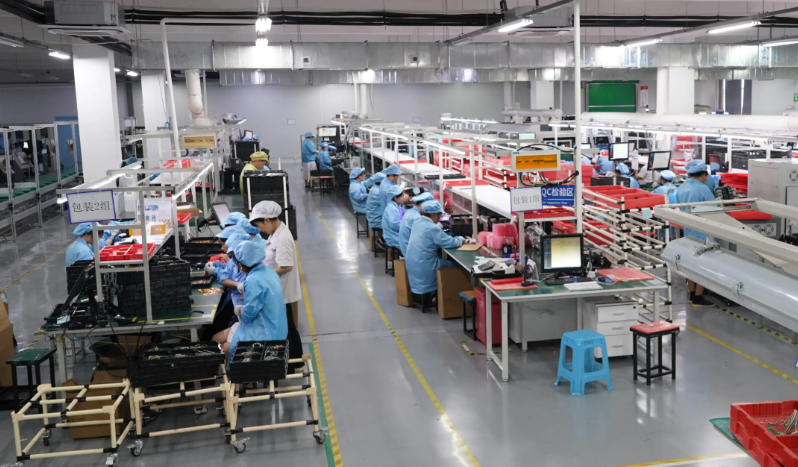
Material and Inventory Transfer: The Most Easily Overlooked Step
Material transfers require a clear understanding of who owns what.
| Category | Items to Confirm |
|---|---|
| Customer-supplied/consigned materials | Quantities, batches, storage conditions, and transfer and transportation arrangements |
| Dedicated materials already purchased by the supplier | Ownership, whether the materials will be repurchased, and how the risk of obsolete inventory will be handled |
| Work in Process (WIP) | Whether items are completed, scrapped, or transferred, and how responsibilities are allocated |
| Finished Goods Inventory | Delivery plans and the handling of remaining orders |
| Alternative Components and AVL | Whether the new supplier will follow the approved list to avoid unauthorized substitutions |
| Traceability Records | Ensure that old and new production batches can be linked to facilitate problem identification |
Material risk reminder: Custom components, long-lead-time chips, and end-of-life (EOL) components are the most likely bottlenecks during a transition. These risks should be assessed and a material preparation plan developed as early as Stage 2.
Communication and Contracts: Avoid Damaging the Relationship and Causing Supply Interruptions During the Transition
- Communicate in stages: Discuss the transition plan with the old supplier only after documentation has been secured and an alternative supplier has been substantially confirmed. This helps avoid triggering supply instability too early.
- Secure transition-period support: Where possible, arrange for the old supplier to continue supplying products and cooperate with documentation handover throughout the transition period.
- Confidentiality and documentation retrieval: After the transition is complete, clearly define the old supplier’s confidentiality obligations regarding design documentation and how the documentation must be handled.
- Settle payments and inventory: Clarify arrangements for dedicated materials, work in process, returned materials, and outstanding payments.
- Maintain consistent internal and external communication: Ensure that R&D, procurement, quality, and sales teams use consistent timelines and risk messaging to avoid making inappropriate commitments to customers.
Additional Considerations for Different Industries
| Industry | Additional Considerations |
|---|---|
| Medical Electronics | Quality management systems and change control requirements are more stringent. Changing suppliers may involve change notifications, revalidation, or documentation updates. Relevant requirements should be verified in advance. |
| Automotive Electronics | Customer approval and process validation are generally required. It is advisable to confirm the procedures and timelines in advance. |
| Industrial Control | Long-term supply and traceability are important. Pay attention to material consistency and product life cycles. |
| Consumer Electronics/IoT | Cost and lead time are more sensitive factors, but certification status (such as that of wireless modules) and compatibility with alternative components must still be considered. |
Cost and Timeline: How to Budget and Schedule the Transition
Potential cost items (actual costs can vary significantly from project to project; refer to actual quotations):
- One-time engineering fees charged by the new supplier (stencils, fixtures, test programs, programming fixtures, etc. Refer to How Are Stencil Fees, Testing Fees, and Setup Fees Calculated in PCBA Quotations?).
- Prototype and validation costs (prototype boards, FAI, and reliability validation).
- Additional inventory and management costs during the parallel production period.
- Logistics and documentation transfer costs.
- Internal labor costs (engineering, quality, and procurement).
The main factors affecting the timeline include product complexity (whether BGA, HDI, or other technologies are involved), documentation completeness, material availability, validation requirements, industry certification requirements, and customer approval procedures. The transition timelines for simple products and high-reliability products can differ significantly. Therefore, it is advisable to develop a preliminary schedule at Stage 0 and allow sufficient buffer time.
Common Mistakes Before Switching Suppliers and How to Prevent Them
| Mistake | Consequence | Prevention |
|---|---|---|
| Not obtaining complete documentation before notifying the old supplier | The transition gets stalled, leaving you in a passive position | Complete the documentation inventory and archiving first |
| Assuming the BOM versions are consistent when unrecorded alternative components are actually being used | Inconsistencies between products manufactured by the old and new suppliers | Obtain the production BOM and records of alternative components |
| Failing to transfer the test plan or allowing it to be simplified | Declining product quality | Clearly define test coverage and align on it in writing |
| Skipping the parallel production phase and transferring all production volume at once | Supply interruptions if problems arise with the new supplier | Transfer production in batches and retain the old supplier |
| Failing to establish production transfer thresholds | Production volume is transferred based on subjective judgment | Define metrics and thresholds in advance |
| Ignoring the handling of dedicated materials and work in process | Obsolete inventory losses and disputes over responsibility | Take inventory and agree on handling arrangements at Stage 2 |
| Terminating cooperation with the old supplier too early | Losing the fallback option | Allow the old supplier to exit only after the new supplier has demonstrated stable performance |
| Underestimating industry approval or change notification requirements | Delays or even compliance risks | Verify industry-specific and customer requirements in advance |
Ready-to-Use Supplier Transition Checklist
Stages 0–1: Decision and Documentation
- Evaluated the root causes of the problems and confirmed that switching suppliers is preferable to improvement or dual sourcing.
- Reviewed key contractual provisions (exclusivity, notice periods, tooling, inventory, and confidentiality).
- Completed the documentation ownership audit and frozen document revisions.
- Organized the transfer package (Gerber files, BOM including AVL, coordinate files, assembly drawings, test plans, programming files, and inspection standards).
Stage 2: Alignment with the New Supplier
- Completed DFM/DFA reviews and closed all outstanding issues.
- Documented the approval process for alternative components and engineering changes.
- Aligned on the test plan and acceptance criteria.
- Confirmed the arrangements for parallel validation and batch-by-batch production transfer.
Stages 3–4: Validation and Production Transfer
- Completed FAI and golden sample comparison.
- Met the predefined validation metrics and production transfer thresholds.
- Transferred production in batches and continuously monitored performance metrics.
- Put the planned buffer inventory in place.
Stage 5: Closeout
- Completed the inventory count and transfer of inventory, customer-supplied/consigned materials, and work in process.
- Settled outstanding payments and clarified responsibilities.
- Implemented confidentiality obligations and documentation retrieval arrangements.
- Retained the old supplier as an alternative or formally terminated the relationship.
Conclusion
The challenge in changing PCB assembly suppliers is not “finding a new factory,” but completely transferring documentation, processes, testing, materials, and responsibilities while ensuring uninterrupted supply.
The core approach to managing this transition successfully is to first audit documentation and asset ownership, then validate the new supplier using prototypes and small batches, establish production transfer thresholds based on data, maintain supply continuity through buffer inventory and a dual-source transition, and finally allow the old supplier to exit only after the new supplier has demonstrated stable performance.
If you are evaluating a change of PCBA supplier or need to review your existing documentation package, BOM, and test plans before a transition, feel free to contact the engineering team at Leadsintec. We can help you inventory your documentation, identify potential risks, and jointly develop a validation and production transfer plan.