

A complete PCBA quotation usually includes not only the familiar PCB fabrication cost, component procurement cost, and SMT assembly cost, but also three additional charges that often confuse customers: stencil fees (for manufacturing SMT solder paste printing stencils), testing fees (for testing processes such as ICT, FCT, and AOI), and setup fees (also known as machine setup fees, covering the time required for SMT production line changeover, programming, and first article confirmation).
These three charges are not “arbitrary fees.” They have clear manufacturing and engineering bases as well as specific calculation logic. However, they are also among the costs that are most easily handled vaguely by factories or even charged repeatedly in quotations.
This article explains these three costs step by step in the following order: what they are → how they are calculated → whether they should be charged → how to reduce them.
1. Why Do These Three “Additional Fees” Appear in a PCBA Quote?
PCB fabrication costs, component costs, and SMT assembly costs are generally material and processing costs that increase linearly with production quantity. In contrast, stencil fees, testing fees, and setup fees are essentially one-time engineering costs.
Whether you produce 1 PCB or 1,000 PCBs, these preparation processes still need to be completed once.
When the production volume is large enough, these costs are distributed across each board and become almost unnoticeable. However, during small-batch prototyping, these three costs may account for a significant portion of the total quotation.
This is also the fundamental reason why prototype unit prices are significantly higher than mass-production unit prices.
Understanding how these three costs are calculated is essential for determining whether a PCBA quotation is reasonable.
- Setup Fee (Engineering Fee): The basic labor and engineering cost for SMT production line changeover, new product introduction, program debugging, and process verification. It is the basic startup cost of SMT production.
- Stencil Fee: The customized manufacturing cost of the stencil specifically used for SMT solder paste printing. It is a dedicated tooling consumable for PCB assembly, typically corresponding to a specific PCB design or panel configuration.
- Testing Fee: The process cost for PCBA finished-product functional testing, electrical inspection, and defect troubleshooting, ensuring that the circuit board can be powered on and operated properly and meets the required performance standards.
2. How Is the Stencil Fee Calculated?
2.1 What Is an SMT Stencil Used For?
A stencil (also called an SMT template) is used during the SMT printing process.
Solder paste is precisely printed onto the PCB pads through the openings in the stencil, after which the components are placed and the board goes through reflow soldering.
A stencil is dedicated tooling corresponding to a specific PCB design and pad layout. Once the PCB dimensions, panelization method, or pad layout changes, the existing stencil usually cannot be directly reused.
2.2 Charging Method and Reasonable Price Range
Stencil fees are generally charged per set.
The price is affected by factors such as:
- Stencil size
- Aperture manufacturing process
- Laser cutting
- Electropolishing
- Nano coating
- PCB design complexity and precision requirements
For first-time production, a commonly seen reasonable industry price range is approximately RMB 100–500 per set, depending on the PCB size and stencil precision requirements.
For example, fine-pitch components with a pitch below 0.4 mm require higher stencil aperture accuracy, and the cost will increase accordingly.
2.3 When Should You Pay the Stencil Fee, and When Should You Not?
| Situation | Is the Charge Reasonable? |
|---|---|
| First-time prototyping, and no corresponding stencil exists for the PCB design | ✅ Reasonable. This is a necessary one-time tooling cost. |
| The PCB dimensions, panelization method, or pad layout has changed | ✅ Reasonable. The previous stencil cannot be reused and a new stencil is required. |
| The same PCB is repeatedly prototyped, but the factory charges a stencil fee every time | ⚠️ Unreasonable. The factory should retain the stencil for future reuse. |
| The factory has a stencil inventory management system and can automatically match the same or compatible stencil | ✅ The existing stencil should be reused free of charge, with no additional stencil fee required. |
Pitfall Reminder: Before placing an order, it is recommended to ask the factory directly: “Can the stencil be reused for future orders, and is there any charge for stencil reuse?”
You should also check whether the quotation charges a separate stencil fee for every prototype order.
3. How Is the Testing Fee Calculated?
3.1 Common Types of Testing
Depending on product complexity and reliability requirements, PCBA testing may include one or more of the following methods:
| Testing Method | Purpose | Typical Application |
|---|---|---|
| Flying Probe Testing | Detects open circuits and short circuits without requiring dedicated test fixtures | Prototyping, small-batch production, and projects with frequently changing PCB designs |
| ICT (In-Circuit Testing) | Checks whether components are properly soldered and whether electrical parameters are correct | Mass production, usually requiring dedicated test fixtures |
| FCT (Functional Circuit Testing) | Simulates the actual operating condition of the finished product and verifies whether all functions operate correctly | Finished PCB assemblies with high functional reliability requirements |
| AOI (Automated Optical Inspection) | Detects component misalignment, solder bridging, and missing components | A standard inspection process for almost all SMT orders |
| X-Ray Inspection | Inspects the soldering quality of hidden solder joints such as BGA and QFN packages | PCBAs containing bottom-terminated components such as BGA and QFN |
| Burn-in Testing | Powers and operates the product for a period of time to screen for early-life component failures | Industrial and automotive products requiring high long-term stability |
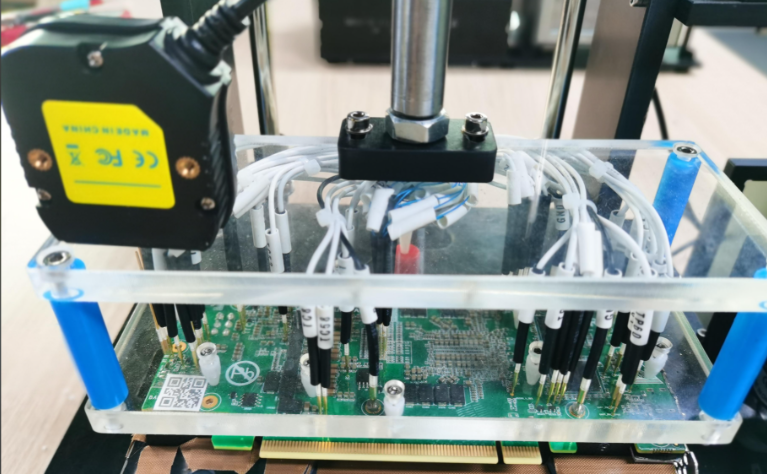
3.2 Charging Logic
Testing fees do not have a fixed unit price. They are generally calculated based on the combination of testing items + testing time required for each PCB.
The more testing procedures required and the longer each board takes to test, the higher the overall testing cost.
There is also another cost that is often overlooked: if the customer does not provide an existing test solution, such as test point information, test programs, or Boundary Scan files, the factory may need to develop dedicated testing fixtures or write testing programs.
The development cost for these items is usually charged separately as part of the testing fee or engineering fee.
3.3 How to Control Testing Costs
- Plan and reserve sufficient Test Points during the PCB design stage to avoid rework caused by adding test points later.
- If you already have existing test programs or Boundary Scan files, proactively provide them to the factory to reduce or eliminate test fixture and program development costs.
- The larger the production quantity, the more effectively the one-time development cost of testing fixtures can be distributed across each PCB. During small-batch prototyping, testing methods that do not require dedicated fixtures, such as Flying Probe Testing, can be prioritized.
4. How Is the Setup Fee (Machine Setup Fee) Calculated?
4.1 Why Do SMT Production Lines Charge a Setup Fee?
Before an SMT placement machine switches to a new PCB order, a series of preparation tasks must be completed, including programming, component loading, PCB positioning, and first article verification.
This preparation process typically takes 15–30 minutes or even longer, during which the production line is not generating output.
For small-batch orders with a limited number of boards, the cost of production line preparation time represents a relatively high proportion of the total production cost.
Therefore, factories charge a setup fee to cover this loss.
In essence, this fee pays for the production line changeover time, rather than for the actual component placement process itself.
4.2 Charging Method and Common Industry Standards
Setup fees are generally charged based on the number of assembly sides, with single-sided SMT assembly and double-sided SMT assembly charged separately.
A commonly seen industry price range is approximately:
- Single-sided SMT setup fee: around RMB 300
- Double-sided SMT setup fee: around RMB 500
The actual cost may vary depending on the factory’s equipment, production capacity, and location.
Some factories also use a combined quotation model of “setup fee + placement cost per point”.
For example:
RMB 300 setup fee + RMB 0.08 per placement point
4.3 When Can the Setup Fee Be Waived?
Factories with dedicated prototype production lines, long-term experience in high-mix low-volume production, and efficient production line changeover processes—typically capable of completing changeovers within 15–30 minutes—may be able to offer zero setup fees or significantly reduced setup fees.
In contrast, factories that use standard mass-production lines and temporarily insert prototype orders into the production schedule usually have higher changeover costs and therefore charge higher setup fees.
When selecting a PCBA manufacturer, whether the factory has a dedicated prototype production line is an important factor in determining whether the setup fee is reasonable.
5. Comparison of the Three Fees
| Cost Item | Corresponding Process | Charging Method | Common Price Range | Reusable / Can Be Waived |
|---|---|---|---|---|
| Stencil Fee | SMT solder paste printing | Charged per set | RMB 100–500 per set | Can be reused for the same PCB design; repeated charges are generally unreasonable |
| Testing Fee | Testing and inspection | Calculated based on testing items + testing time | Depends on the combination of testing items; no fixed unit price | Providing an existing test solution may eliminate test fixture development costs |
| Setup Fee | SMT production line changeover and preparation | Charged based on assembly sides (single-sided/double-sided) | Around RMB 300 for single-sided assembly and RMB 500 for double-sided assembly | Factories with dedicated prototype production lines may significantly reduce or waive the fee |
6. Common Quotation Traps and How to Avoid Them
“Zero Engineering Fee” but Setup Fees Are Still Charged
Some factories may quote an engineering fee of RMB 0 to attract customers, while separately charging setup fees and stencil fees.
When comparing quotations, all cost items should be added together and compared based on the total cost. Do not judge a quotation simply by whether one individual item is quoted as zero.
Repeated Stencil Fees for Every Prototype Order
Even when the same PCB design is repeatedly prototyped, some factories may require the customer to pay a new stencil fee every time.
In this situation, customers should proactively ask whether the factory has a proper stencil inventory and management system that allows previously manufactured stencils to be retained and reused.
Providing Only a Total Price Without a Cost Breakdown
A reasonable PCBA quotation should clearly list individual costs, including:
- PCB fabrication cost
- Component cost
- SMT assembly cost
- Stencil fee
- Testing fee
- Setup fee
If a factory provides only a general total price without a detailed breakdown, there is a higher risk of additional charges being added after the order is placed.
Vague Testing Fees
If a quotation simply lists a number for “testing fee” without specifying which testing procedures are included, additional charges may arise later when further testing requirements are introduced.
It is recommended to require the factory to clearly provide a detailed list of included testing items.
7. How to Optimize These Three Costs Through PCB Design and Purchasing?
From the Design Side
- Whenever possible, continue using previously validated PCB dimensions and panelization methods to improve stencil reuse.
- Plan test points during the PCB layout stage to avoid additional fixture development costs caused by adding test points later.
- Optimize the DFM (Design for Manufacturability) process and reduce repeated prototyping caused by design issues, thereby reducing repeated stencil, testing, and setup costs at the source.
From the Purchasing Side
- Give priority to factories with dedicated prototype production lines and high production line changeover efficiency to reduce setup fees.
- Establish long-term cooperation with the factory so that stencils, testing programs, and other tooling can be retained for future orders and reused free of charge or at a lower cost.
- Combine multiple PCB models into the same production schedule or prototype batch to distribute the fixed costs of machine setup and engineering preparation.
- Request detailed itemized quotations and compare the total quotation from multiple factories rather than focusing on a single cost item.
8. Frequently Asked Questions (FAQ)
Q1: Why Is the Unit Price of Small-Batch PCBA Much Higher Than That of Large-Volume Production?
Stencil fees, setup fees, and testing fees are all fixed costs.
For small-batch orders, these fixed costs must be distributed across a limited number of products, significantly increasing the cost per PCB.
For large-volume orders, the fixed costs can be distributed across a much larger quantity, and some fees may even be reduced or waived. Therefore, the unit price naturally becomes lower.
Q2: Do I Still Need to Pay Stencil Fees and Setup Fees When Reordering the Same PCB?
If the stencil is retained by the manufacturer within its storage period, typically 3–12 months, it can generally be reused free of charge without paying a second stencil fee.
Setup fees are generally charged only during the initial introduction of a new PCB model. If the same PCB design has no process modifications and does not require additional production line adjustment, the setup fee may be waived for repeat orders.
Q3: How Can I Determine Whether a Quotation Is Reasonable and Avoid Overpaying?
A professional quotation should clearly list all three fixed costs separately rather than providing only a bundled price.
When comparing quotations, focus primarily on the overall total cost, rather than comparing only individual unit prices.
You should also confirm the following in advance:
- Stencil retention period
- Testing standards and included testing items
- Expedited production charges
This helps avoid hidden additional charges later in the project.
Q4: What Situations May Result in Additional Costs?
Additional charges may apply in situations including:
- Oversized PCB dimensions
- Precision or special manufacturing processes
- Expedited lead times
- Secondary design revisions requiring machine readjustment
- Additional IC programming
- Burn-in testing
- Rework of defective products
These potential additional costs should be confirmed with the factory before placing the order.
Conclusion
Stencil fees, testing fees, and setup fees may appear to be relatively minor items in a PCBA quotation, but they represent real manufacturing costs, engineering preparation, and tooling investment.
Understanding how these costs are calculated can help you determine whether a quotation is reasonable and also enable you to optimize your PCB design and purchasing strategy to reduce repeated one-time costs.
The core principle can be summarized as follows:
There is no need to overthink necessary costs during the first prototype run. However, during repeated prototyping and mass production, the key is to watch for unreasonable repeated charges.
By using the comparison table and cost-avoidance checklist in this article, you can generally evaluate whether a PCBA quotation is reasonable more quickly when reviewing the quotation.