

With the rapid evolution of high-power electronics, third-generation semiconductors, and AI computing industries, aluminum nitride (AlN) ceramic substrates have become the core material for high-end electronic packaging, replacing traditional alumina substrates due to their outstanding thermal conductivity, excellent electrical insulation, and highly compatible thermal expansion properties. This article systematically analyzes the technical value and industrial prospects of AlN ceramic substrates from five dimensions: core performance, selection criteria, manufacturing processes, industry applications, and domestic substitution trends, providing professional guidance for material selection and application in the electronics industry.
Introduction: The Essential Need for Heat Dissipation and Insulation in High-Power Electronics
As electronic devices continue developing toward miniaturization, higher power density, and higher frequencies, chip integration and power consumption are continuously increasing. Insufficient heat dissipation, insulation failure, and thermal stress cracking have become the three major bottlenecks limiting device lifespan and stability.
Traditional alumina (Al₂O₃) ceramic substrates offer thermal conductivity of only 20–30 W/(m·K), making them insufficient for high-power applications such as IGBT modules, high-speed optical modules, and electric vehicle control systems. Although metal substrates provide acceptable thermal conductivity, they suffer from poor insulation performance and high high-frequency losses.
Aluminum nitride ceramic substrates emerged to address these challenges. With thermal conductivity reaching 170–220 W/(m·K)—5 to 10 times higher than alumina—they also feature high insulation resistance, low thermal expansion, and excellent high-temperature resistance. These characteristics make AlN substrates ideal for demanding high-power electronic applications, positioning them as the “hidden thermal management core” of third-generation semiconductors and AI computing industries.
Core Performance of Aluminum Nitride Ceramic Substrates: Five Key Advantages Leading Advanced Packaging
Aluminum nitride ceramic substrates are precision ceramic materials manufactured from high-purity AlN powder through high-temperature sintering. Their performance parameters directly determine the reliability of electronic packaging.
1. Ultra-High Thermal Conductivity Solves Heat Dissipation Bottlenecks
With thermal conductivity of 170–220 W/(m·K), AlN approaches nearly half that of pure copper (401 W/(m·K)) and is 5–10 times more conductive than alumina ceramics. It rapidly transfers heat away from chips, reducing junction temperatures from 120°C to around 65°C and improving heat dissipation efficiency by more than four times, effectively eliminating localized overheating in high-power devices.
2. Excellent Electrical Insulation for High-Voltage and High-Frequency Applications
AlN substrates exhibit volume resistivity greater than 1×10¹⁴ Ω·cm and breakdown voltage exceeding 15 kV/mm. Their insulation properties remain stable even at elevated temperatures, enabling them to withstand the high-voltage impact of 800V EV platforms and industrial power inverters while satisfying electrical isolation requirements in high-frequency circuits.
3. Matched Thermal Expansion Coefficient Reduces Thermal Stress
The coefficient of thermal expansion (CTE) of AlN ranges from 4.5–5.6 ppm/°C, closely matching silicon chips (2.6 ppm/°C) and SiC/GaN third-generation semiconductor devices. During thermal cycling between -55°C and 150°C, AlN significantly reduces thermal stress, preventing interface cracking and delamination while improving long-term reliability.
4. Low Dielectric Loss Ensures High-Frequency Signal Integrity
AlN has a dielectric constant of approximately 8.8 at 1 MHz and dielectric loss below 0.0005, lower than alumina ceramics. This greatly reduces signal transmission delay and loss in 5G millimeter-wave and high-speed optical modules, supporting ultra-high-speed optical communication scenarios such as 1.6T and 3.2T systems.
5. High-Temperature Resistance and Chemical Stability for Extreme Conditions
AlN can operate stably at temperatures below 1350°C for extended periods while offering excellent oxidation and thermal shock resistance. Its resistance to acid and alkali corrosion enables weight loss below 0.01 g in plasma etching and cleaning environments, making it suitable for semiconductor manufacturing, aerospace, and military applications.
Performance Comparison: AlN vs Alumina vs Metal Substrates
| Performance Parameter | Aluminum Nitride Ceramic Substrate | Alumina Ceramic Substrate | Metal Substrate |
|---|---|---|---|
| Thermal Conductivity (W/(m·K)) | 170–220 | 20–30 | 100–150 |
| Thermal Expansion Coefficient (ppm/°C) | 4.5–5.6 | 7–8 | 17–19 |
| Breakdown Voltage (kV/mm) | >15 | 10–12 | Insulation layer <5 |
| Dielectric Constant (@1MHz) | 8.8 | 9.5 | — |
| Typical Applications | High-power, high-frequency, high-voltage | Medium/low power, low frequency | Medium power, low voltage |
Mainstream Ceramic Substrate Material Selection (AlN / Si₃N₄ / Al₂O₃)
In electronic packaging, aluminum nitride (AlN), silicon nitride (Si₃N₄), and alumina (Al₂O₃) ceramic substrates each serve distinct purposes based on power density, operating conditions, reliability requirements, and cost considerations.
Suitable Applications for AlN Ceramic Substrates
- High-speed optical modules: 800G/1.6T/3.2T optical transmission systems requiring low dielectric loss and fast heat dissipation
- AI computing servers: High-density computing chips with high heat flux requirements
- SiC/GaN third-generation power devices: Excellent thermal expansion matching with wide-bandgap semiconductors
- High-frequency RF devices: 5G millimeter-wave and RF power amplifiers sensitive to signal loss
- High heat-flux packaging: Compact, high-power integrated packaging requiring exceptional thermal performance
Suitable Applications for Si₃N₄ Ceramic Substrates
- High mechanical shock environments
- Strong vibration environments such as automotive and aerospace applications
- Automotive-grade high-reliability power modules emphasizing ultra-long lifespan and stability
Suitable Applications for Al₂O₃ Ceramic Substrates
- Medium- and low-power electronics such as LEDs and standard power circuits
- Cost-sensitive consumer electronics
- Conventional industrial control equipment operating under low-frequency and low-power conditions
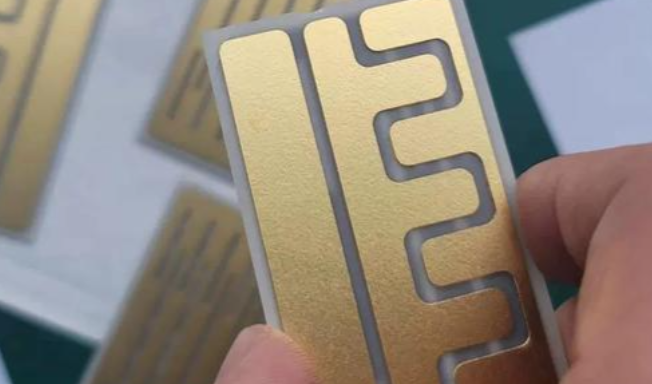
How to Select Aluminum Nitride Ceramic Substrates
Proper substrate selection based on application requirements, operating conditions, and processing needs is critical for ensuring cost-effectiveness and system reliability.
1. Selection by Thermal Conductivity
- Standard medium/high-power applications: 170–190 W/(m·K)
- Ultra-high-power or dense heat dissipation applications: 200–230 W/(m·K)
- Low-power auxiliary substrate applications: Entry-level AlN products
2. Selection by Dimensions, Thickness, and Precision
- Thickness range: Typically 0.15–1.0 mm
- Ultra-thin devices may require 0.08 mm substrates
- High-power modules generally require thicker substrates for mechanical strength
- Precision devices require dimensional tolerances ≤0.001 mm and parallelism/concentricity ≤0.003 mm
3. Selection by Electrical Performance
- High-voltage applications require breakdown strength ≥17 kV/mm
- High-frequency communication systems prioritize low dielectric constant and dielectric loss
- Standard low-voltage circuits can use conventional electrical specifications
4. Selection by Metallization Process
DBC (Direct Bonded Copper)
Suitable for high-power modules with strong copper adhesion and high current-carrying capacity.
AMB (Active Metal Brazing)
Excellent thermal cycling stability for automotive and aerospace products.
DPC (Direct Plated Copper)
High line precision suitable for miniaturized and high-density circuits in optical communication and RF devices.
5. Selection by Operating Environment
- Thermal cycling applications require close CTE matching
- Corrosive or plasma environments require highly corrosion-resistant black AlN substrates
- High vibration and impact environments require flexural strength above 450 MPa
Manufacturing Processes of Aluminum Nitride Ceramic Substrates
The performance of AlN ceramic substrates depends heavily on precise process control throughout manufacturing.
1. Raw Material Preparation
High-purity (>99.9%) AlN powder is combined with small amounts of sintering additives such as Y₂O₃ and CaO. Ball milling and spray drying produce uniform slurry while oxygen content is controlled below 1%.
2. Forming Processes
Tape Casting
Suitable for ultra-thin (0.2–1 mm), large-area substrates with high precision and consistency.
Dry Pressing
Used for thick, small-sized substrates with high efficiency and low cost.
Isostatic Pressing
Provides uniform density and high strength for complex, high-reliability applications.
Injection Molding
Suitable for miniature and complex structures in semiconductor packaging.
3. Sintering Process
Pressureless sintering at 1800–1900°C under nitrogen atmosphere is widely used for large-scale production. High-end applications may adopt hot pressing to achieve density above 99% and superior thermal conductivity.
4. Precision Machining and Metallization
Post-sintering processes include laser cutting, precision grinding, and polishing to achieve surface roughness below Ra 0.5 μm. Metallization technologies such as DBC, AMB, and DPC create strong copper-to-ceramic bonding with current-carrying capability reaching 600 A/cm².
Core Industry Applications of Aluminum Nitride Ceramic Substrates
1. High-Speed Optical Modules (Core of AI Computing)
800G/1.6T/3.2T optical modules are critical transmission components for AI servers and data centers. AlN substrates improve thermal efficiency by over five times and maintain chip junction temperatures below 60°C while supporting high-frequency signal transmission.
2. New Energy Vehicle Power Systems
Used in 800V EV platforms, SiC power devices, motor controllers, onboard chargers (OBC), and battery packs.
- Improves power density by over 30%
- Increases energy conversion efficiency by 5%–8%
- Reduces thermal failure probability
3. Third-Generation Semiconductor Power Devices
AlN substrates match the thermal expansion characteristics of SiC/GaN semiconductors, enabling reliable operation under high-temperature and high-frequency conditions.
4. 5G Communication and RF Devices
Used in base station power amplifiers, filters, and millimeter-wave antenna substrates, reducing signal attenuation and ensuring stable operation.
5. Industrial, Military, and Aerospace Applications
- Semiconductor etching equipment
- High-power laser systems
- Radar systems
- Avionics and satellite components
Conclusion
With ultra-high thermal conductivity, excellent insulation, thermal expansion matching, low dielectric loss, and high-temperature resistance, aluminum nitride ceramic substrates effectively solve the key challenges of heat dissipation, insulation, and thermal stress in high-power electronics.
Today, AlN substrates are widely used in high-speed optical modules, new energy vehicles, third-generation semiconductors, and 5G communications. Although manufacturing remains technologically demanding, breakthroughs in domestic production capabilities are accelerating import substitution and driving rapid market expansion.
As AI computing, 6G communication, and electric vehicle industries continue to grow, demand for aluminum nitride ceramic substrates is expected to maintain strong momentum, making this one of the most promising sectors in advanced electronic packaging.