

The best PCB manufacturer in China depends on your project type. In terms of revenue scale and overall strength, listed industry leaders such as Avary Holding , Shennan Circuits, Kinwong Electronic, and Victory Giant Technology stand out. For small-batch orders and rapid prototyping, online platforms such as JLCPCB, PCBWay, and ElePCB offer greater flexibility. If you need one-stop PCB and PCBA delivery, prioritize manufacturers with SMT assembly and electronic component sourcing capabilities. For high-reliability products in automotive, medical, and communications applications, carefully verify certifications such as IATF 16949 and ISO 13485.
Quick Selection Recommendations:
- Consumer electronics, high-end HDI, and AI servers: Consider large-scale industry leaders and manufacturers specializing in high-multilayer PCBs and HDI.
- Prototyping, maker projects, and small batches: Choose rapid-prototyping platforms that offer online ordering and instant quotations.
- Automotive, medical, and industrial control: Focus on certifications, process control, and industry experience.
- Complete products requiring hassle-free delivery: Choose one-stop PCB and PCBA service providers.
I. Overview of China’s PCB Industry in 2026
China is the world’s largest PCB producer. According to statistics cited by ASKCI, China’s PCB market is projected to reach approximately RMB 325.9 billion (about USD 45 billion) in 2026, accounting for approximately 60% of the global PCB market. In 2025, China’s PCB exports totaled approximately USD 26.03 billion, representing year-on-year growth of around 29%. Exports of high-multilayer boards recorded particularly strong growth, at approximately 45.7%. These figures are cited through third-party sources, so the original reports should be verified before they are referenced.
Distribution of Industry Clusters:
| Region | Characteristics | Suitable Applications |
|---|---|---|
| South China (Pearl River Delta: Shenzhen, Dongguan, Huizhou) | The highest concentration of companies, accounting for more than half of PCB-related enterprises nationwide | Consumer electronics, HDI, rapid prototyping, and one-stop PCBA services |
| East China (Yangtze River Delta: Suzhou, Kunshan, Shanghai, Wuxi) | Concentration of high-end manufacturing, accounting for approximately 30% | Automotive electronics, communications equipment, servers, and high-multilayer boards |
| Central and Western China (Jiangxi, Hubei, Sichuan, etc.) | Production capacity continues to shift to these regions, offering significant cost advantages | High-volume standard boards and cost-sensitive orders |
Three Major Industry Trends:
- AI servers and high-speed communications are driving demand for high-multilayer and high-speed PCBs, prompting leading manufacturers to expand their production capacity.
- HDI and package substrate technologies are advancing toward finer line widths and spacing and higher layer counts.
- Environmental manufacturing and compliance requirements are becoming more stringent, making RoHS, REACH, and ISO 14001 increasingly important requirements for export markets.
II. Five Dimensions for Evaluating the “Best” Manufacturer
To avoid being misled by marketing-driven rankings, it is advisable to evaluate any Chinese PCB supplier using the following five dimensions:
- Scale and Financial Stability: Revenue, production capacity, and disclosures from publicly listed companies help determine the stability of long-term deliveries.
- Technical Capabilities: Maximum layer count, minimum line width and spacing, HDI build-up levels, blind and buried vias, impedance control, and high-frequency/high-speed materials.
- Quality Management Systems and Certifications: ISO 9001, IATF 16949 (automotive), ISO 13485 (medical), UL, IPC standards, RoHS, and REACH.
- Lead Times and Service: Prototyping speed, mass-production lead times, DFM engineering support, communication responsiveness, and English-language service capabilities.
- Total Cost: Look beyond unit prices to consider engineering fees, testing fees, shipping costs, tariffs, scrap rates, and rework risks.
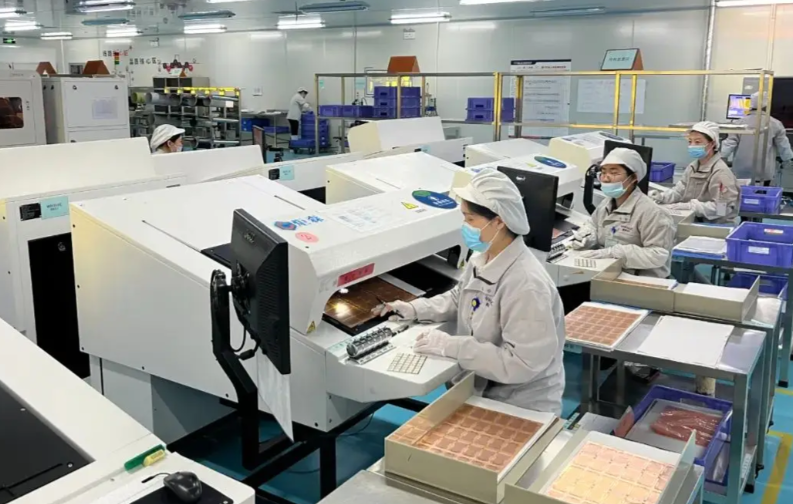
III. Overview of the Top 15 PCB Manufacturers in China
Note: The manufacturers below are grouped by category and are not listed in an official ranking. No authoritative organization has yet identified a single company as the definitive “best” manufacturer. Information on capabilities and certifications is primarily compiled from manufacturers’ public profiles and industry sources. Before placing an order, verify the details against each manufacturer’s official website, latest annual reports, and actual factory audit results. Some companies are headquartered in Taiwan, China, and operate manufacturing facilities in mainland China; these have been noted accordingly.
Category 1: Large-Scale Industry Leaders (Suitable for High-Volume Production and High-End Products)
1. Avary Holding
According to global PCB revenue rankings published by Prismark, the company was listed among the world’s largest PCB manufacturers from 2017 to 2024. Its products include HDI, rigid PCBs, rigid-flex PCBs, FPCs, substrate-like PCBs (SLP), and IC substrates, serving communications, computing, consumer electronics, automotive, and industrial control applications.
Key Strengths: Significant R&D investment and strong one-stop supply capabilities.
2. Shennan Circuit
The company specializes in high-frequency RF boards, 5G communication boards, and automotive PCBs. It serves communications infrastructure, base stations, satellite communications, defense, and aerospace applications. Its strengths include high-layer-count boards and high-speed data transmission products. It also has a presence in automotive electronics, including battery management and ADAS-related circuit boards.
Key Strengths: Extensive experience in communications and high-reliability applications.
3. Kinwong Electronic
Its products include rigid PCBs, flexible PCBs, and metal-core PCBs, serving automotive, industrial, and consumer electronics applications. The company also develops HDI and high-frequency/high-speed boards.
Key Strengths: A comprehensive product portfolio and automotive quality management systems, including IATF 16949.
4. Victory Giant Technology
The company specializes in high-end HDI and high-multilayer PCBs. It benefits from growing demand for AI servers, new energy vehicles, and high-speed communications, while continuing to expand production capacity and invest in R&D.
Key Strengths: Proactive development of PCB solutions for AI computing applications.
5. DSBJ
The company provides multilayer PCBs, HDI boards, high-frequency boards, and FPCs for communications, automotive electronics, medical, and industrial control applications. It holds certifications including ISO 9001, IATF 16949, and ISO 13485, and emphasizes intelligent production lines and green manufacturing.
Key Strengths: Broad application coverage, automated manufacturing, and established quality management systems.
6. Suntak Technology
The company primarily manufactures multilayer PCBs, HDI boards, and high-frequency boards. It specializes in high-Tg, halogen-free, and RF materials, serving automotive, medical, industrial, and communications applications. Its management systems include ISO 9001, ISO 14001, and IATF 16949.
Key Strengths: Experience in specialized PCB materials and diverse high-reliability applications.
Category 2: High-End Taiwan-Based Manufacturers (with Manufacturing Facilities in Mainland China)
7. Unimicron Technology
Unimicron is known for its HDI, semiconductor packaging substrate, and high-frequency board technologies. It can manufacture boards with relatively high layer counts and serves aerospace, communications, automotive, and computing applications.
Key Strengths: Advanced HDI and semiconductor packaging substrate technologies.
8. Tripod Technology
The company specializes in high-end multilayer PCBs, HDI, and embedded circuit solutions for automotive electronics, aerospace, defense, and IoT applications. Its certifications include ISO 14001, ISO 9001, and IATF 16949.
Key Strengths: High-end multilayer PCB expertise and experience in demanding applications.
Category 3: Rapid Prototyping and Online Ordering Platforms (Suitable for Prototypes and Small Batches)
9. JLCPCB
JLCPCB is known for its low prices and high degree of automation. It is widely used by engineers, makers, and startups. Its services cover single-sided, double-sided, and multilayer PCBs, flexible PCBs, HDI, and PCBA/SMT assembly. Standard prototype lead times can be as short as 24–48 hours.
Key Strengths: Competitive pricing, fast turnaround, and a mature online ordering process.
10. PCBWay
PCBWay serves engineers and product designers, offering online design file uploads, instant quotations, and order tracking. Its capabilities cover multilayer PCBs, HDI, rigid-flex PCBs, and aluminum PCBs. It also provides SMT, through-hole, and mixed-technology assembly services, with a focus on high-mix, low-volume production.
Key Strengths: Convenient online ordering and flexible support for diverse small-batch requirements.
11. ElePCB
ElePCB focuses on rapid prototyping, low costs, and small-batch production. Its product range includes rigid PCBs, flexible PCBs, and aluminum PCBs, making it suitable for wearable devices, power supplies, and IoT equipment. Online instant quotations are available.
Key Strengths: Cost-effective prototyping and convenient online quotation services.
12. Fastprint
Fastprint specializes in rapid prototyping, HDI, and high-reliability circuit boards. Prototype delivery can be as fast as 24–48 hours. Its applications include aerospace, communications, medical electronics, and industrial automation. The company also provides PCBA delivery services.
Key Strengths: Fast prototyping, HDI capabilities, and experience in high-reliability applications.
Category 4: One-Stop PCB and PCBA Service Providers
13. FS Circuits (Shenzhen)
The company focuses on industrial PCBs, aluminum PCBs, and multilayer boards, specializing in power electronics, LED lighting, and industrial automation. It also provides high-power PCB solutions using copper and ceramic substrates.
Key Strengths: Specialized PCB solutions for power electronics and high-power applications.
14. Leadsintec
Leadsintec provides one-stop PCBA services covering PCB manufacturing, electronic component sourcing, SMT/THT assembly, and functional testing. The company specializes in assembling BGA, QFN, and fine-pitch components, serving automotive, medical, and industrial control applications.
Key Strengths: Integrated PCB manufacturing and PCBA services, component sourcing, and assembly expertise for complex components.
15. FCPCBA
FCPCBA provides high-reliability solutions for automotive, communications, medical, and industrial automation applications. Its capabilities include flexible PCBs, rigid-flex PCBs, and metal-core PCBs. Value-added services include SMT assembly, conformal coating, and potting. Its certifications include ISO 9001, IATF 16949, and RoHS compliance.
At a Glance: How to Choose the Right PCB Manufacturer for Different Needs
| Your Requirements | Recommended Manufacturer Type | Representative Manufacturers | Key Points to Verify |
|---|---|---|---|
| High-volume production, high-end HDI, and AI servers | Large-scale industry leaders | Avary Holding, Shennan Circuit, Victory Giant Technology | Minimum order quantity, production scheduling, and technology roadmap |
| Automotive electronics | Manufacturers with automotive-grade quality systems | Kinwong Electronic, DSBJ, Suntak Technology | IATF 16949, traceability, and PPAP |
| High-frequency RF and 5G communications | Communication PCB specialists | Shennan Circuit, Suntak Technology | Materials, impedance control, and lamination capabilities |
| Prototypes, maker projects, and small batches | Online rapid-prototyping platforms | JLCPCB, PCBWay, ElePCB | Lead time, quotation transparency, and DFM support |
| Complete products and hassle-free delivery | One-stop PCB and PCBA service providers | FS Circuits, FCPCBA, and others | Component sourcing, test coverage, and after-sales support |
| Package substrates and ultra-high-layer-count boards | High-end Taiwan-based manufacturers | Unimicron, Tripod Technology | Technical specifications, lead time, and pricing |
IV. How to Choose the Right Chinese PCB Manufacturer for Your Project
1. Check Certifications and Compliance First
General-purpose products should have at least ISO 9001, UL, and RoHS-related compliance. Automotive products require IATF 16949, while medical products require ISO 13485. For exports to the EU, REACH requirements should also be considered.
2. Verify Manufacturing Capabilities
Ask the supplier to provide a capability matrix to confirm its maximum layer count, minimum line width and spacing, hole sizes, materials, surface finishes, impedance control, and HDI capabilities. Also confirm whether the supplier can transition smoothly from prototyping to mass production.
3. Evaluate Engineering Support (DFM/DFA/DFT)
A good supplier will conduct a DFM review before production and identify potential issues involving line widths, pads, panelization, and stack-up design. This can significantly reduce rework and scrap.
4. Understand Process Control and Inspection
Ask whether the supplier uses AOI, X-ray inspection, flying probe testing, ICT, functional testing, solder paste inspection (SPI), and other inspection methods. Confirm the scope of inspection coverage.
5. Evaluate Supply Chain Management
If you need PCBA services, verify whether electronic components are sourced through authorized distributors, whether the supplier maintains an AVL (Approved Vendor List), how it handles shortages and end-of-life components, and whether it can recommend alternative components.
6. Compare Total Cost of Ownership, Not Just Unit Price
The lowest quotation does not necessarily mean the lowest overall cost. Compare engineering fees, tooling and fixture costs, testing fees, shipping costs, tariffs, lead times, scrap rates, and after-sales support.
7. Prioritize Communication Efficiency
Evaluate quotation response times, the quality of technical responses, English-language communication capabilities, and documentation management practices.
8. Protect Intellectual Property
When dealing with proprietary circuits or firmware, sign a non-disclosure agreement (NDA) and confirm file access permissions, data storage practices, and production access controls.
V. How to Order PCBs from China: A Five-Step Process
- Define Your Requirements: Specify the layer count, materials, board thickness, copper thickness, surface finish, impedance requirements, quantity, target lead time, and compliance standards.
- Prepare the Files: Provide Gerber files, drill files, stack-up specifications, the bill of materials (BOM), and centroid/placement files if assembly is required.
- Shortlist Suppliers and Request Quotes: Request quotations from two to three candidate manufacturers. Require itemized pricing that clearly identifies engineering fees, testing fees, shipping costs, and expedited production charges.
- Validate with a Small Batch: Start with prototypes or a first article inspection (FAI). Place the mass-production order only after quality has been verified.
- Confirm Delivery and Logistics: Clarify packaging, shipping methods, tariffs, insurance, and after-sales terms.
Common Pitfalls:
- Comparing only unit prices while overlooking hidden costs.
- Starting production without a DFM review, resulting in batch rework.
- Accepting verbal assurances about materials or certifications instead of written documentation.
- Failing to sign an NDA, increasing the risk of design information leakage.
VI. Comparison of PCB Manufacturers in the United States and China
| Comparison Factor | Chinese PCB Manufacturers | US PCB Manufacturers |
|---|---|---|
| Global Market Share | Approximately 60% | Less than 5% |
| Cost | Generally lower due to economies of scale and supply chain advantages | Higher labor and material costs |
| Lead Time | Fast prototyping and efficient mass production | Fast local delivery and flexible small-batch production |
| Technical Focus | High-volume production and high-density HDI | High-reliability, complex, and regulated applications |
| Typical Certifications and Requirements | ISO 9001, IATF 16949, ISO 13485 | AS9100, ITAR-related compliance, NADCAP, and others |
| Suitable Applications | Consumer electronics, automotive, servers, and cost-sensitive mass production | Aerospace, defense, and certain low-volume medical applications |
VII. Frequently Asked Questions (FAQ)
Q1: Who is the best PCB manufacturer in China?
There is no single answer. In terms of scale, listed industry leaders such as Avary Holding stand out. For rapid prototyping, platforms such as JLCPCB and PCBWay have advantages. For high-end communications and automotive applications, Shennan Circuit and Kinwong Electronic are worth considering. Evaluate suppliers based on technical capabilities, certifications, lead times, and customer references.
Q2: Why are PCBs cheaper in China?
The main reasons include China’s comprehensive supply chain, which reduces material and logistics costs; economies of scale and automation, which improve efficiency; industrial policies and continued investment; and intense competition, which encourages manufacturers to offer flexible services and competitive prices.
Q3: What are the differences between PCB manufacturers in Shenzhen and those in the Yangtze River Delta?
The Pearl River Delta is home to many manufacturers specializing in consumer electronics, HDI, and rapid prototyping. The Yangtze River Delta has a stronger concentration of manufacturers serving automotive electronics, communications equipment, and servers. When selecting a supplier, consider the strengths of each region in relation to your industry.
Q4: How long does PCB prototyping usually take?
Online platforms can ship simple double-sided PCB prototypes in as little as 24–48 hours. Multilayer boards, HDI boards, and boards using specialized materials generally require more time. Actual lead times should be confirmed in the manufacturer’s quotation.
Q5: How can I determine whether a Chinese PCB manufacturer is reliable?
Verify certification documents, request a capability matrix, review previous project cases, conduct small-batch validation, and arrange a third-party factory audit when necessary. Also confirm after-sales support and the terms for handling quality issues.
Q6: Is it better to use the same supplier for PCB and PCBA?
One-stop (turnkey) services can reduce communication costs, shorten lead times, and clarify responsibility, making them suitable for complete products. However, if your PCB fabrication or assembly requirements involve specialized technical challenges, you can select separate suppliers with the strongest capabilities in each area.
Q7: What are the risks of sourcing PCBs from China?
The main risks include quality variations, communication misunderstandings, delivery delays, logistics and tariff costs, and intellectual property risks. DFM reviews, first article inspections, NDAs, and written quality agreements can help reduce these risks.
Q8: What certifications are required for automotive electronic PCBs?
IATF 16949 quality management systems are generally required, together with customer-specific requirements involving UL, traceability, and PPAP.
Conclusion
China is the world’s largest PCB manufacturing base, but the “best manufacturer” depends on the specific project. For high-volume, high-end products, consider leading publicly listed manufacturers. For prototypes and small batches, rapid-prototyping platforms are suitable choices. For hassle-free delivery, consider one-stop PCB and PCBA service providers.
Regardless of which supplier you choose, follow three essential steps: verify certifications, validate manufacturing capabilities, and start with a small-batch order before scaling up production.